 To demonstrate her ideas for rebalancing food slow or supplies in the city Sophie used an unorthodox approach to demonstrate her proposal. Using wire to convey possible food output areas of the site are highlighted using coloured acrylic and linked. The main focus is around an existing supermarket with the intention being to show how redistribution of suppliers could be increased locally.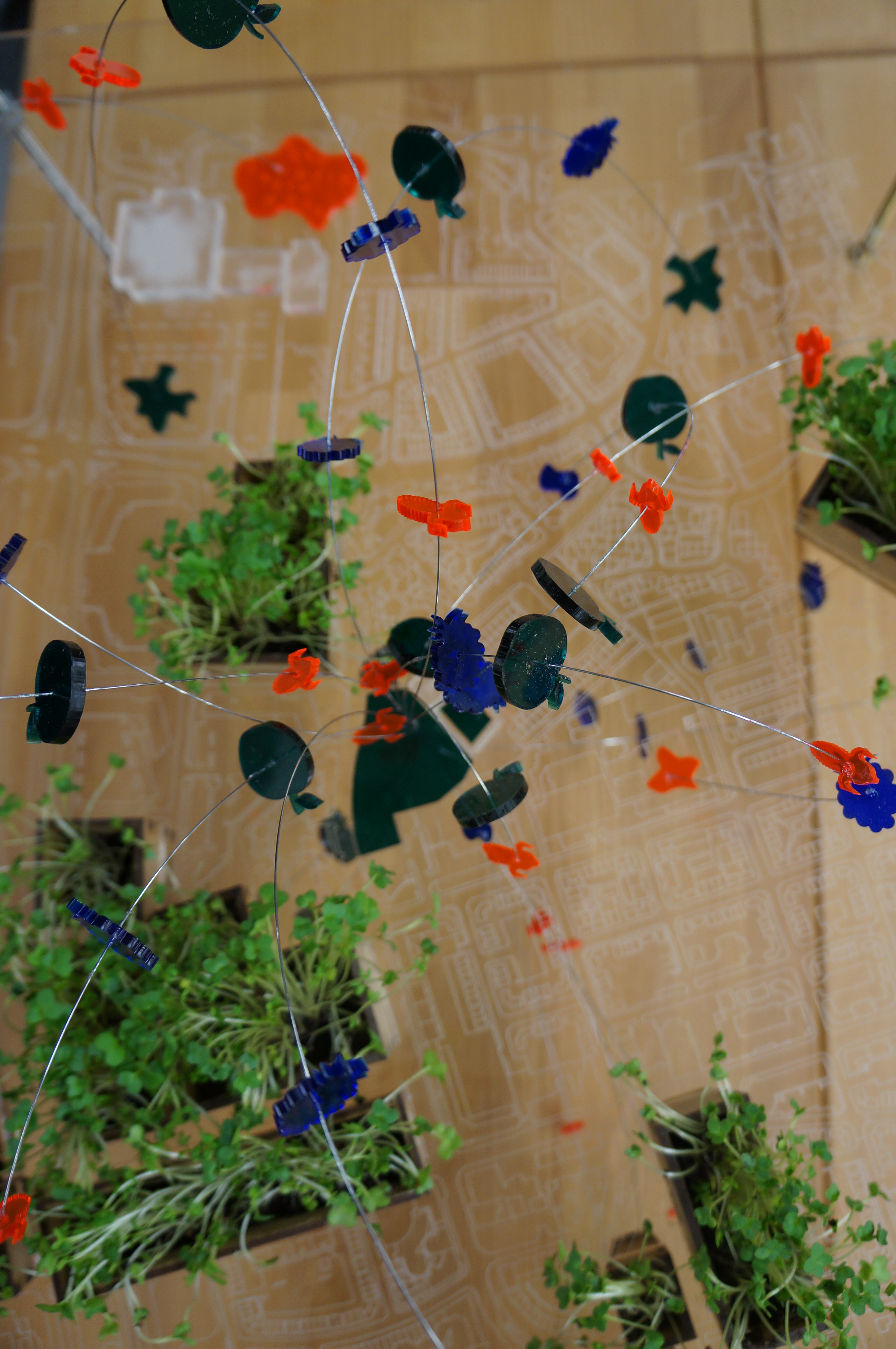
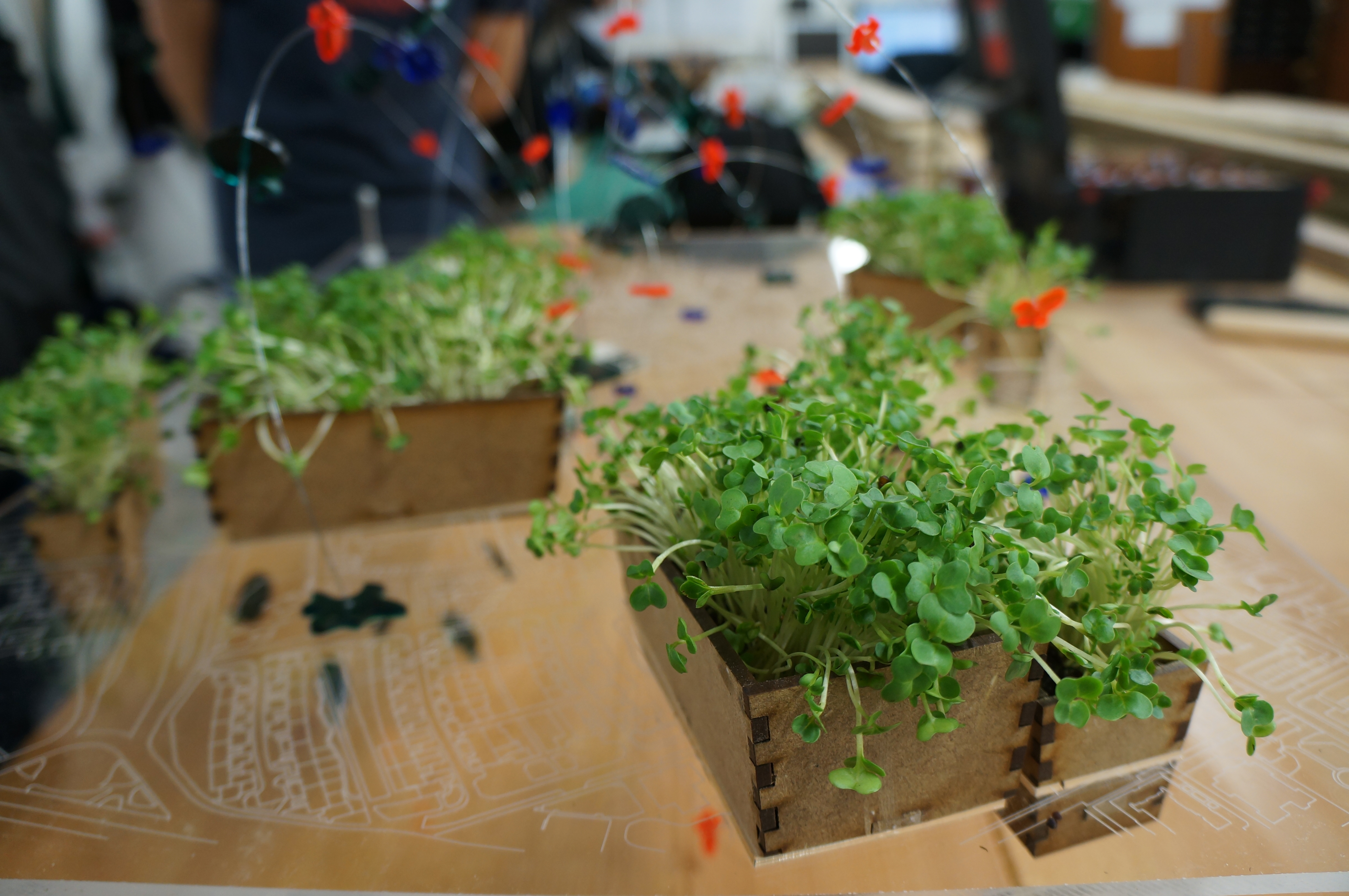 Living water cress troff’s are used in places of significant produce making this a living model – fairly unusual but interesting approach!
Category Archives: Main News Feed
The Peak Pavilion Project
This project consists of 8 ‘peaks’ which each point toward a significant battle of the first world war. Each peak will feature poetry written by patients at who stayed at Dunham Massey during its use as a hospital for wounded soldiers coming back from the front.  As with the other ongoing pavilion projects, this concept began in physical form as a sketch model.Â
As with the other ongoing pavilion projects, this concept began in physical form as a sketch model. 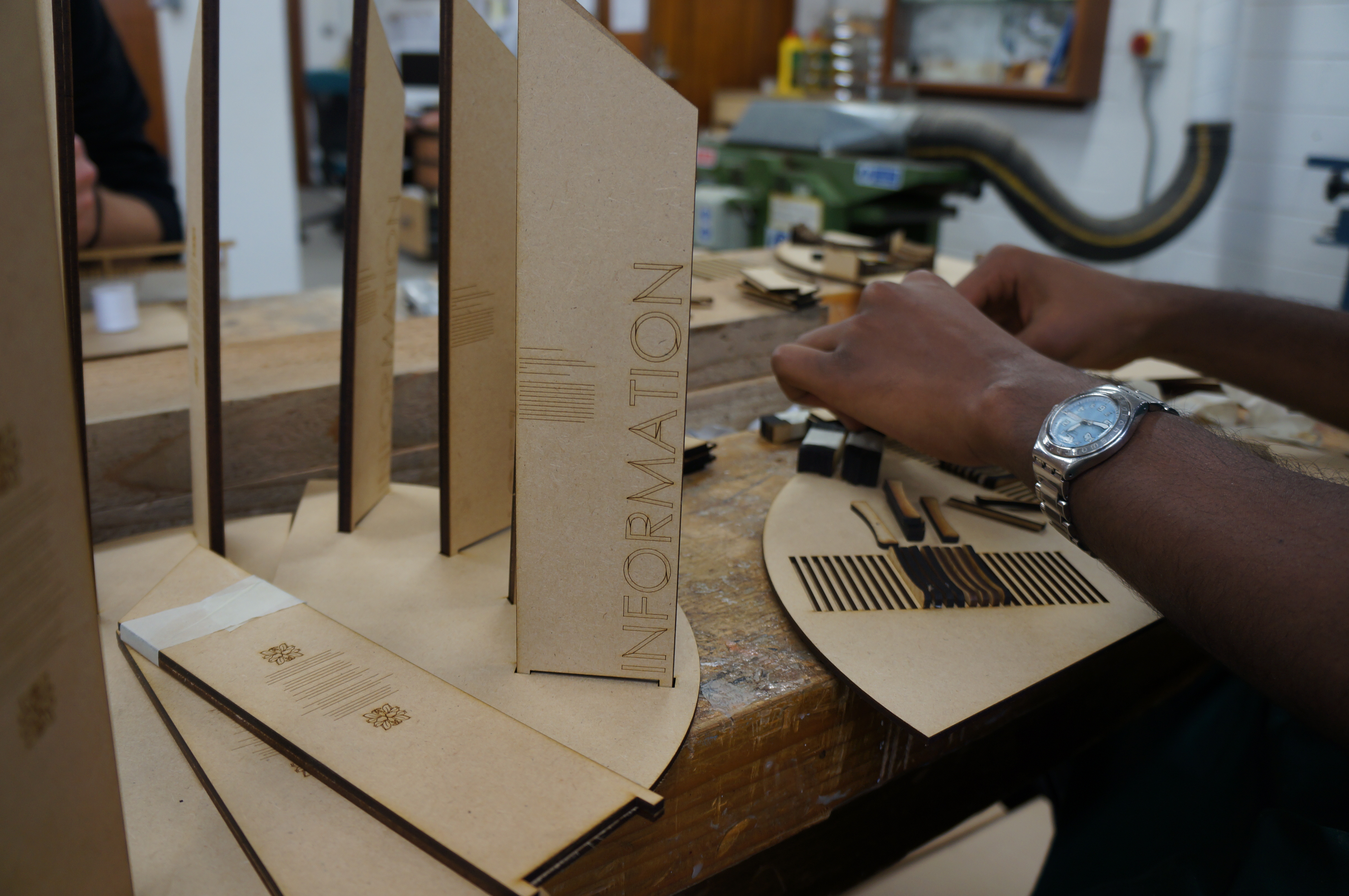
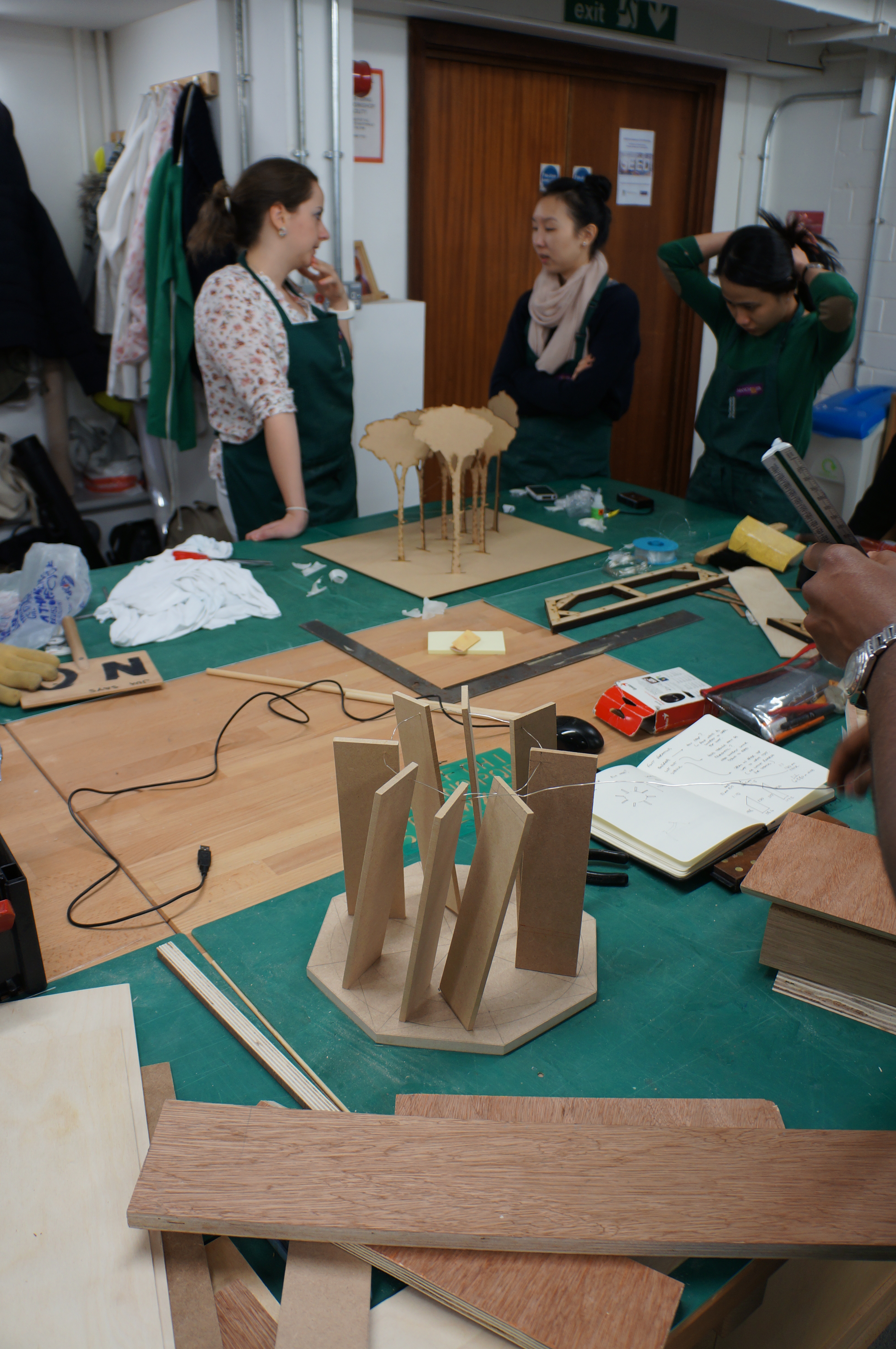 Structural details were designed and refined through a series of test models. This example shows the internal frame construction to support each pillar in the circle.
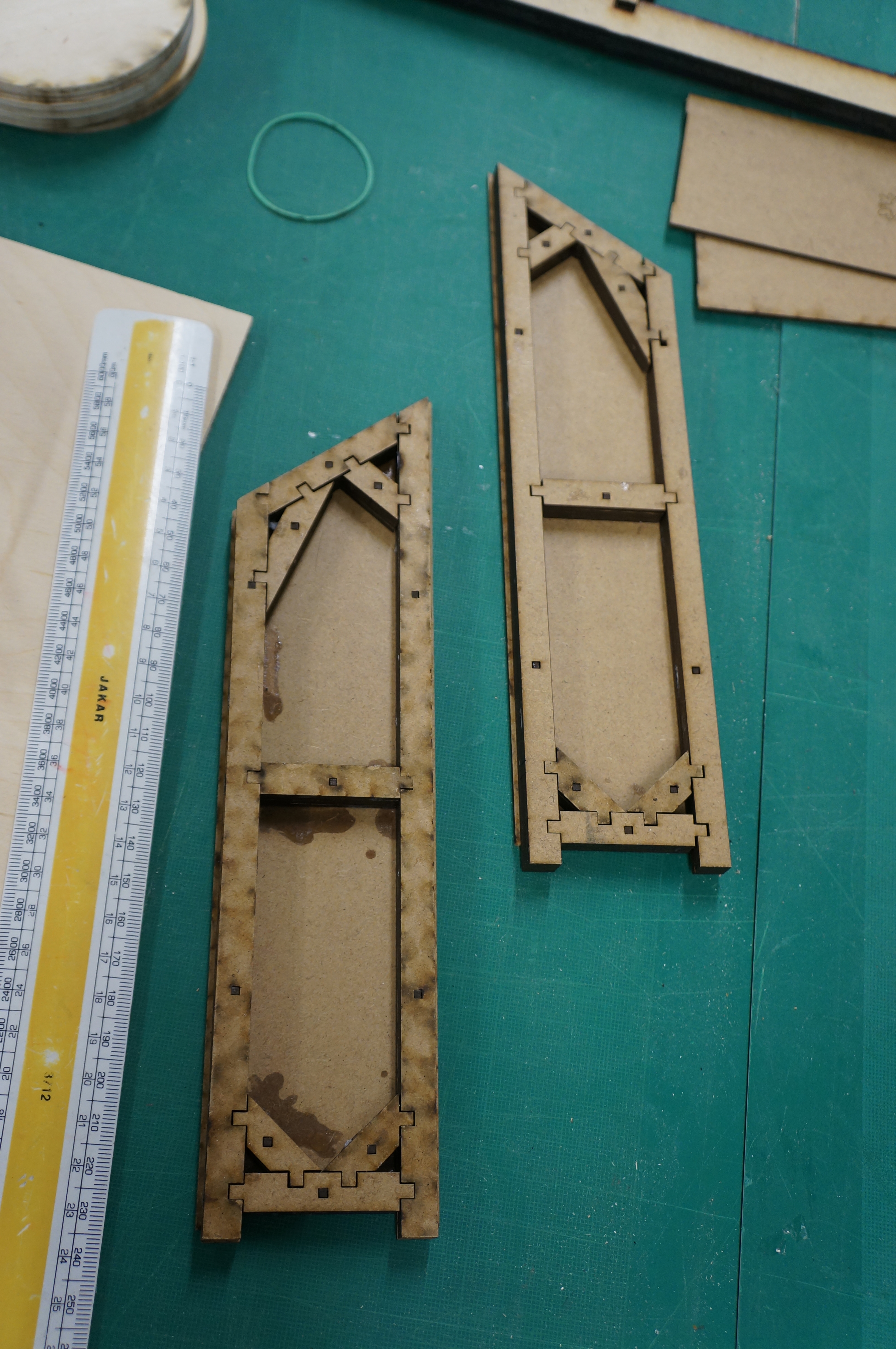
After test models were made at small scale the group went on to make some details at 1:1 to test assembly and strength in reality. This section below shows how the framework inside each panel would be fixed. These kind of 1:1 details are great design theory tests and offer as close an insight as possible to the finished look without building the full structure.
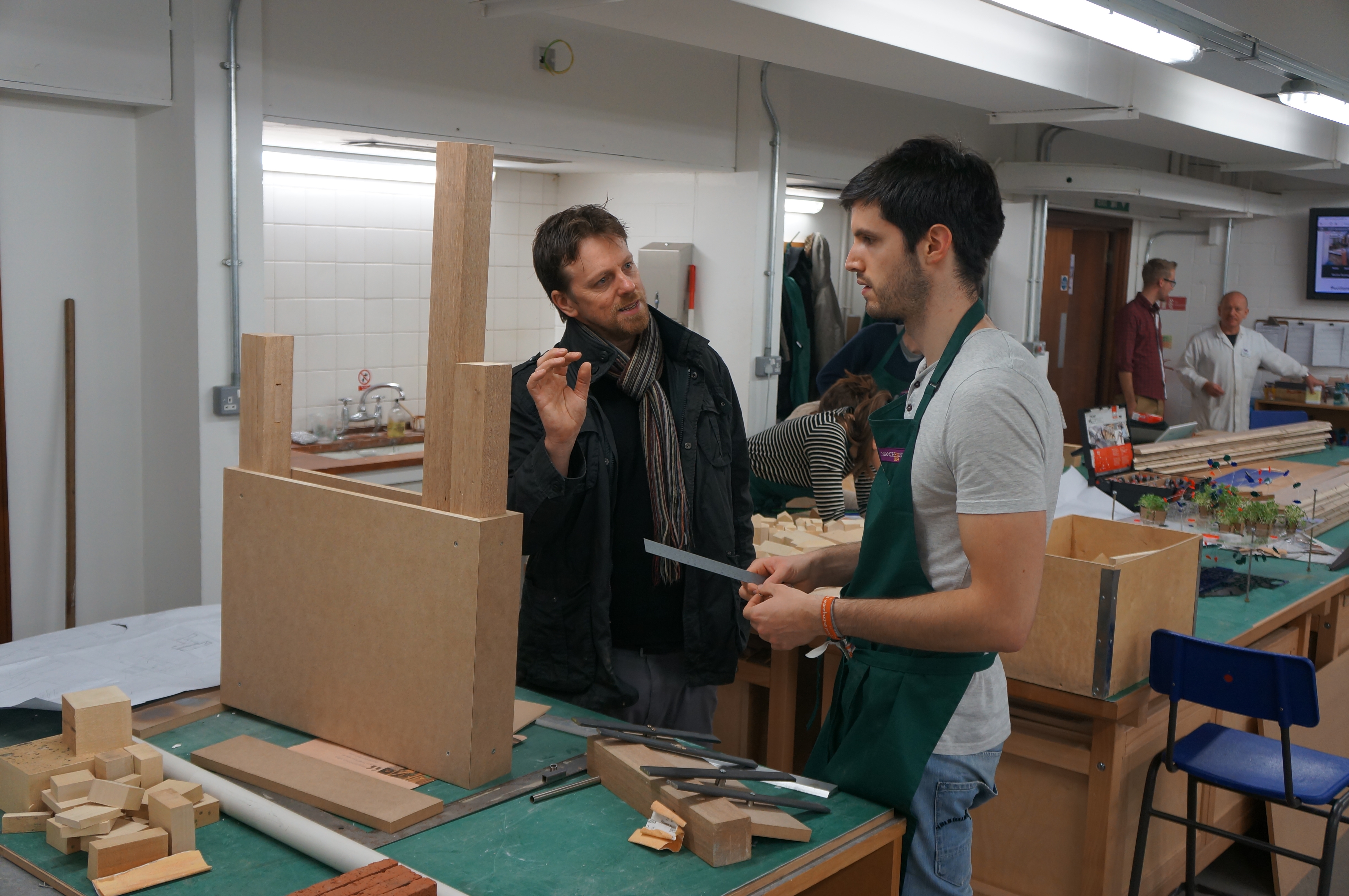 Making components for this project, much like the concrete mould construction on one of the other pavilions required the mass production of specifically angled cuts using our circular saw.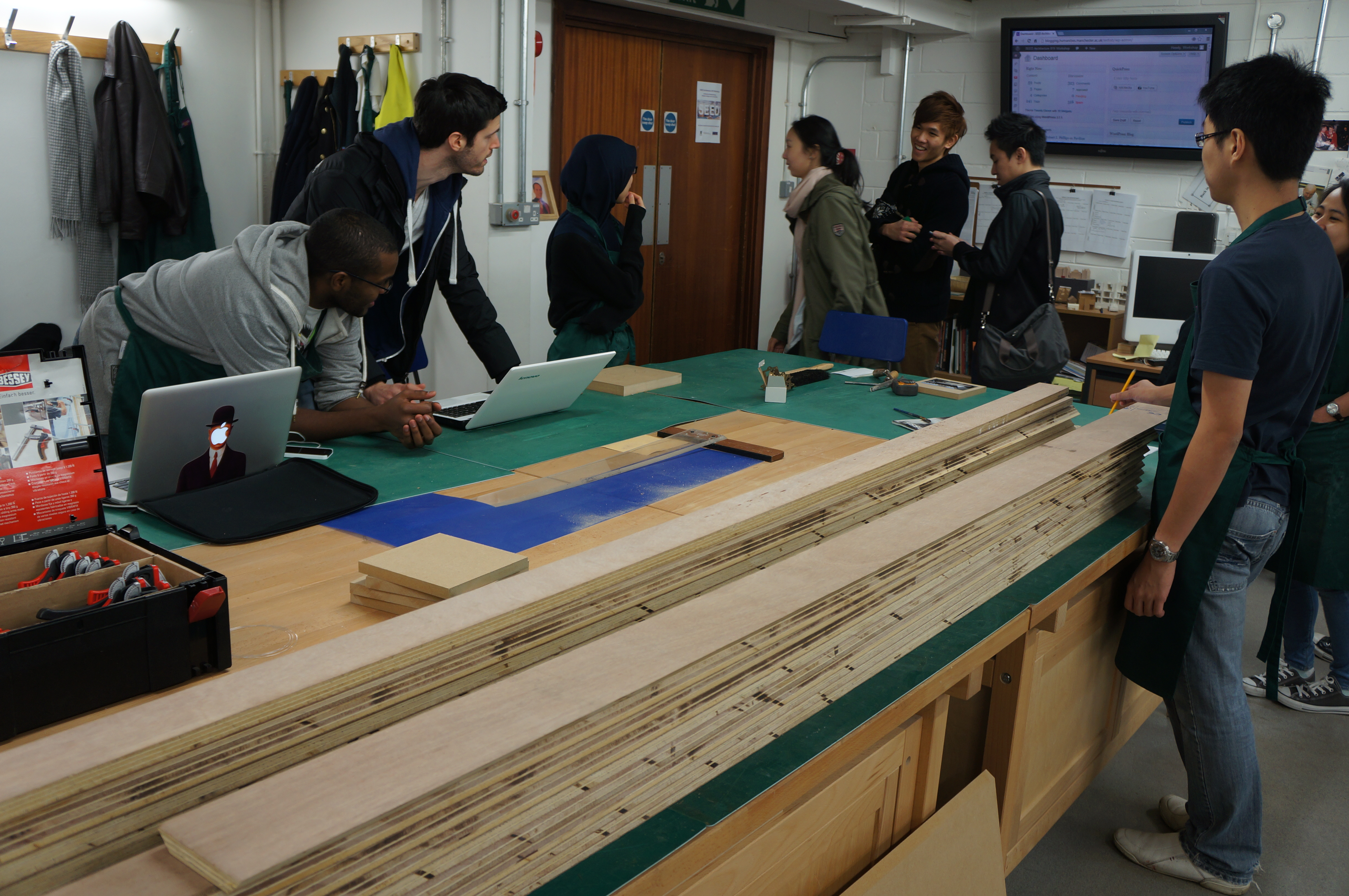
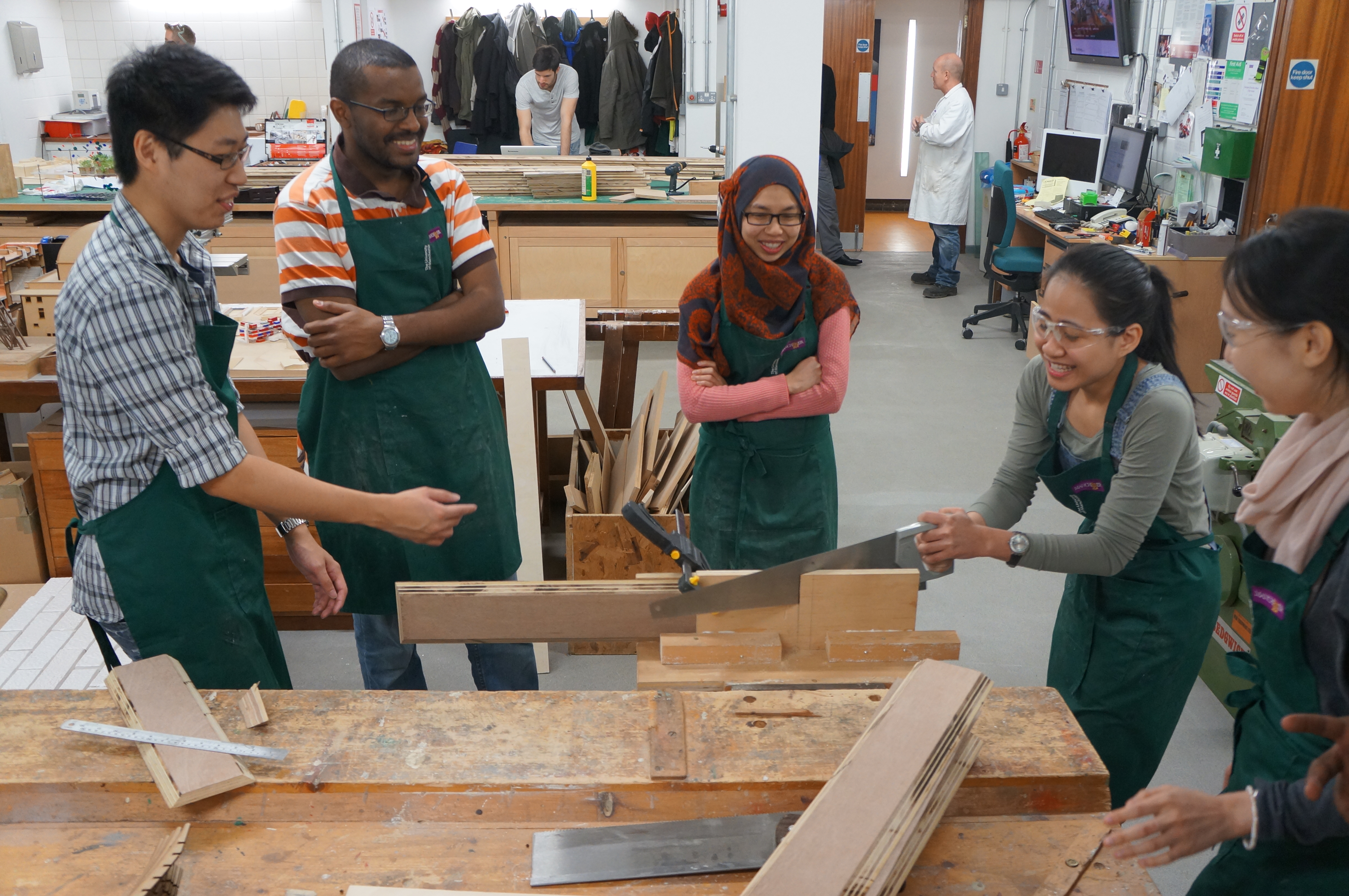
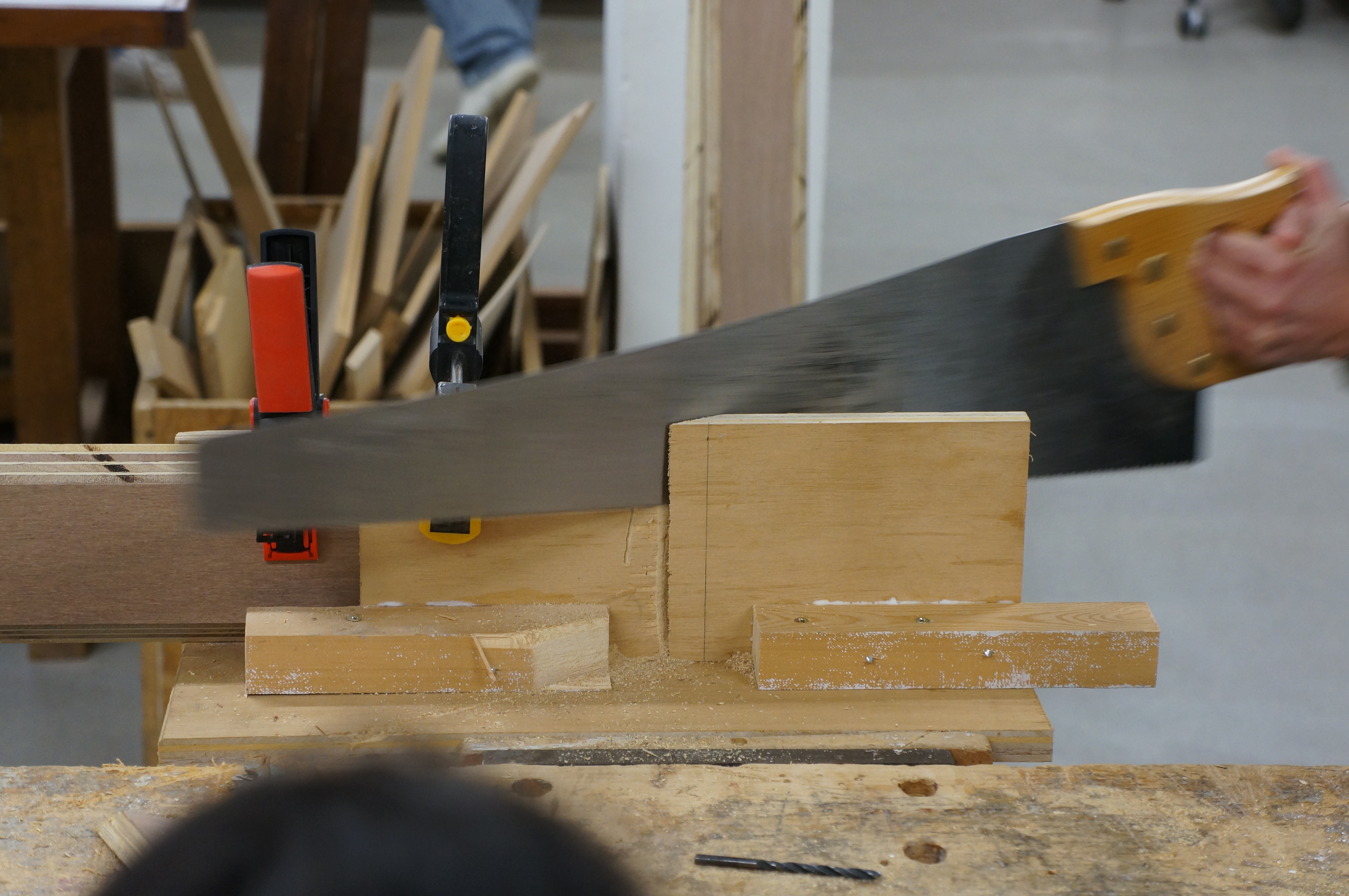
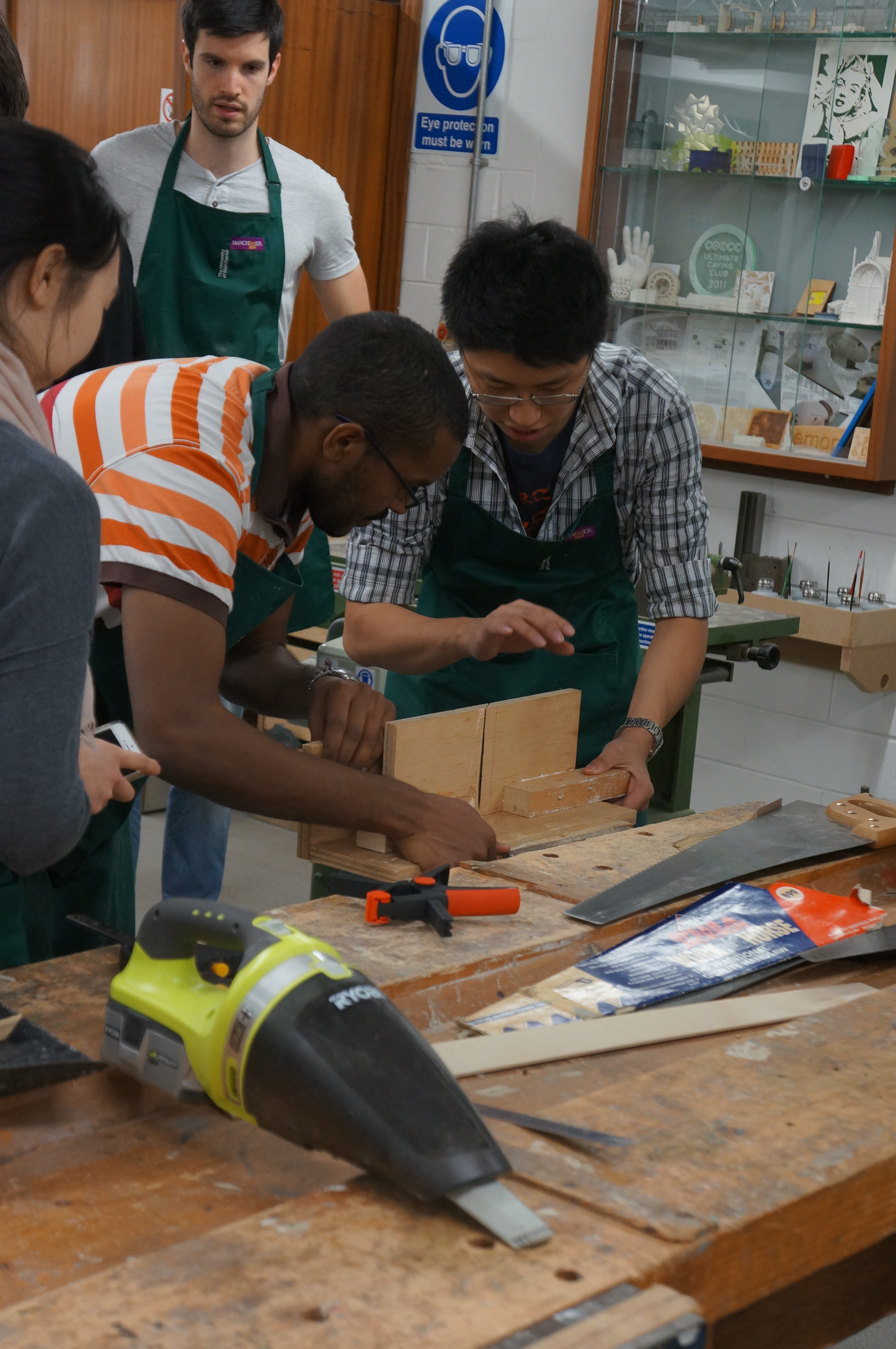 Due to the acute angle required for the top ends of each piece we were unable to cut the required angle using machines. In order to achieve the correct angle the group used a custom made mitre jig and hand saw to cut the correct angle at the end of each component. This proved to be a hand saw learning curve for most of the group after falling into the common misconception about using a hand saw – small fast movements will reduce the effectiveness of your cutting. Taking time to get used to using the main length of the saws teeth and allowing the saw to do the hard work always proves much more effective and less exhausting!Â
 The panels for each peak will be assembled using screws into pre-drilled holes (below) which will be plugged to make them less obvious.Â
The panels for each peak will be assembled using screws into pre-drilled holes (below) which will be plugged to make them less obvious. 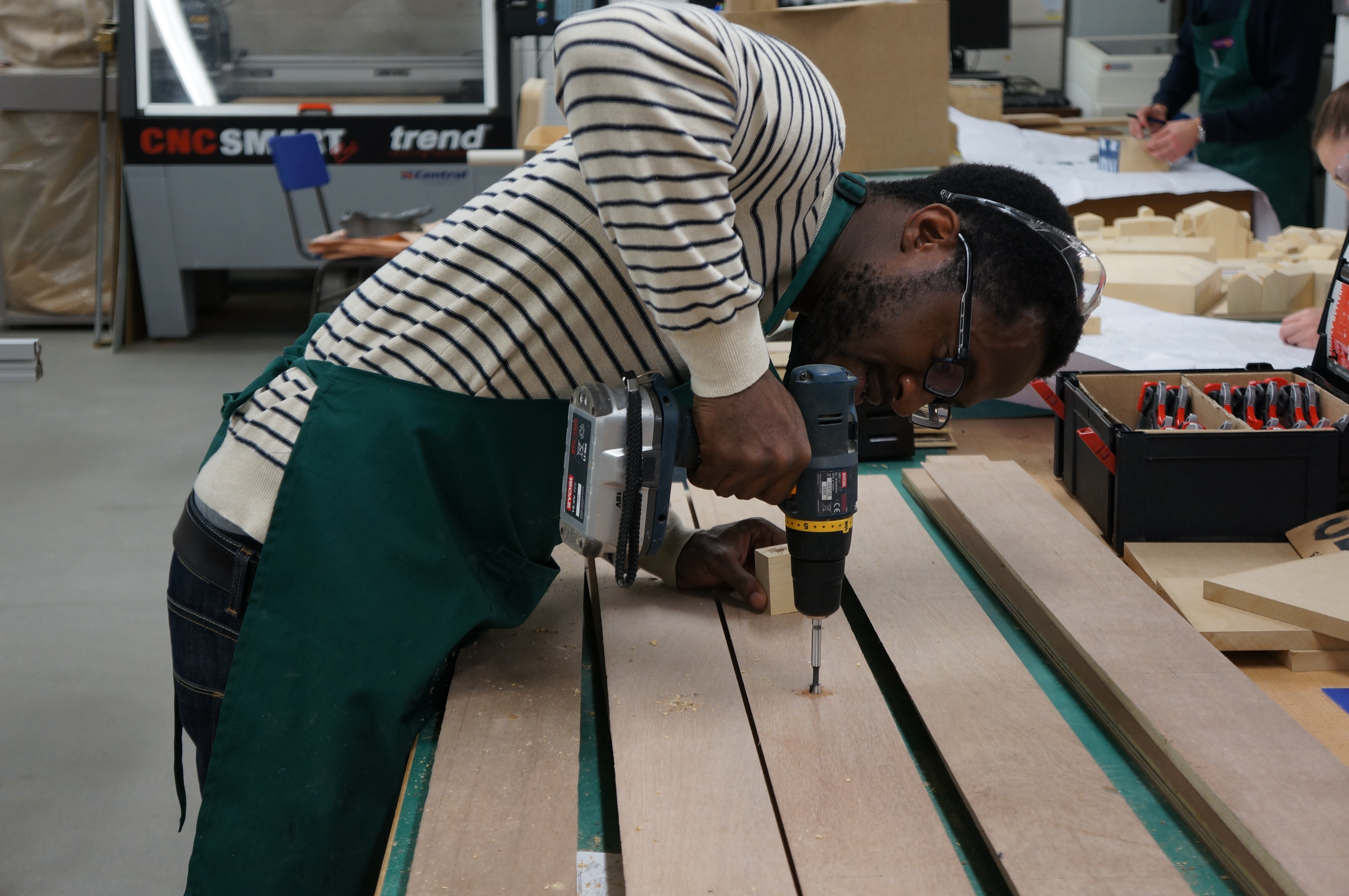 The main panels of each peak will be cut using a large CNC bed at FAB LAB Manchester. As with the other pavilion project developments, we will keep you up to date as things progress.

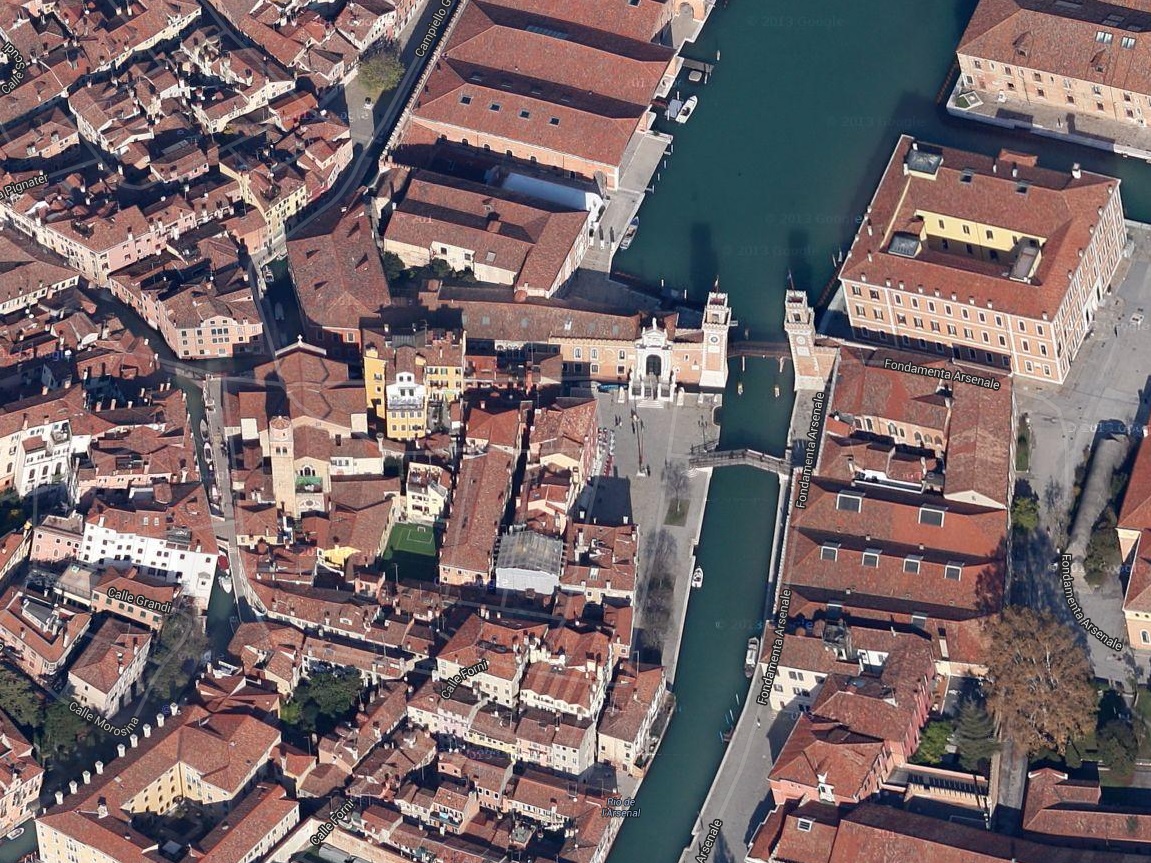
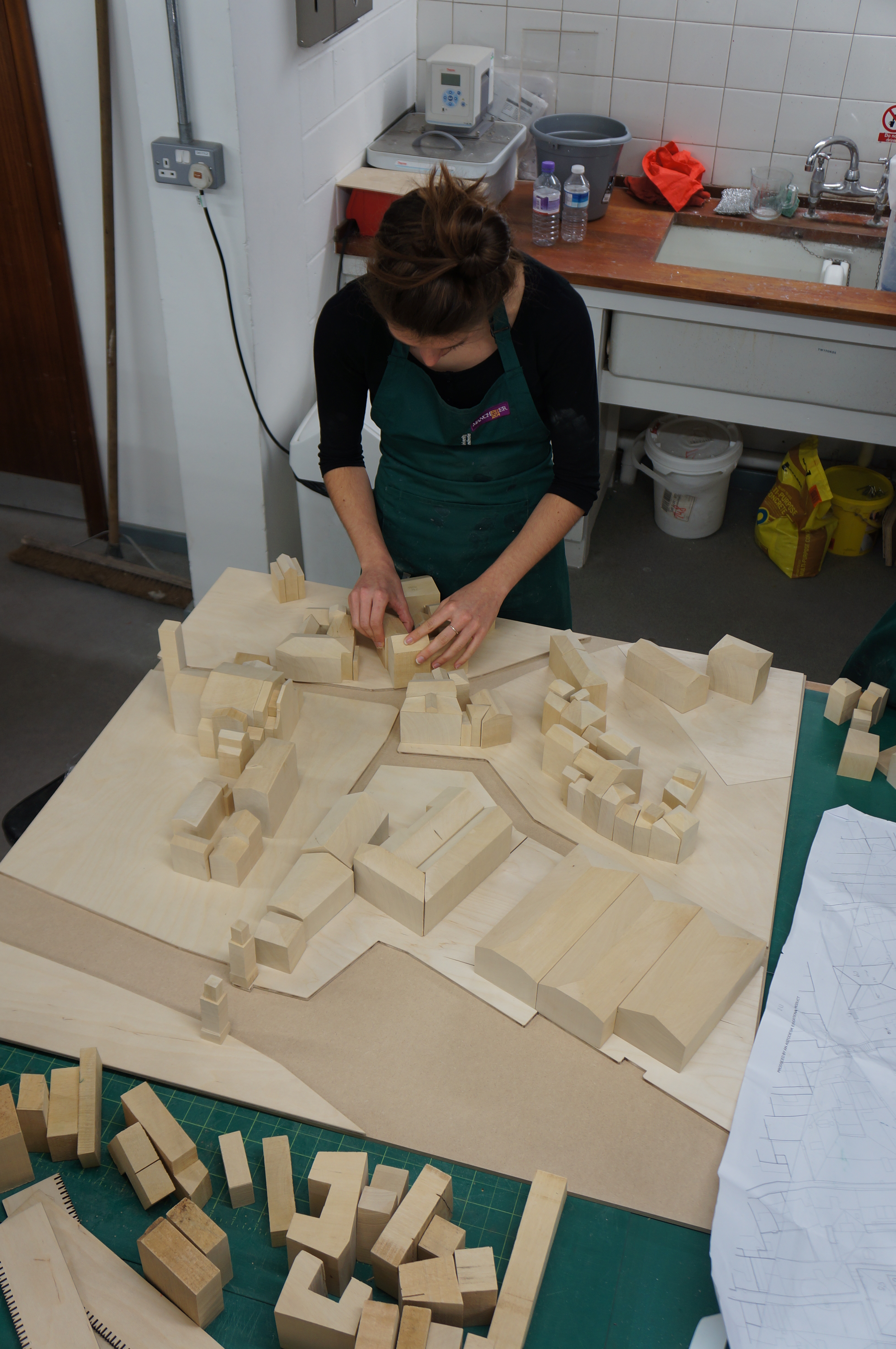
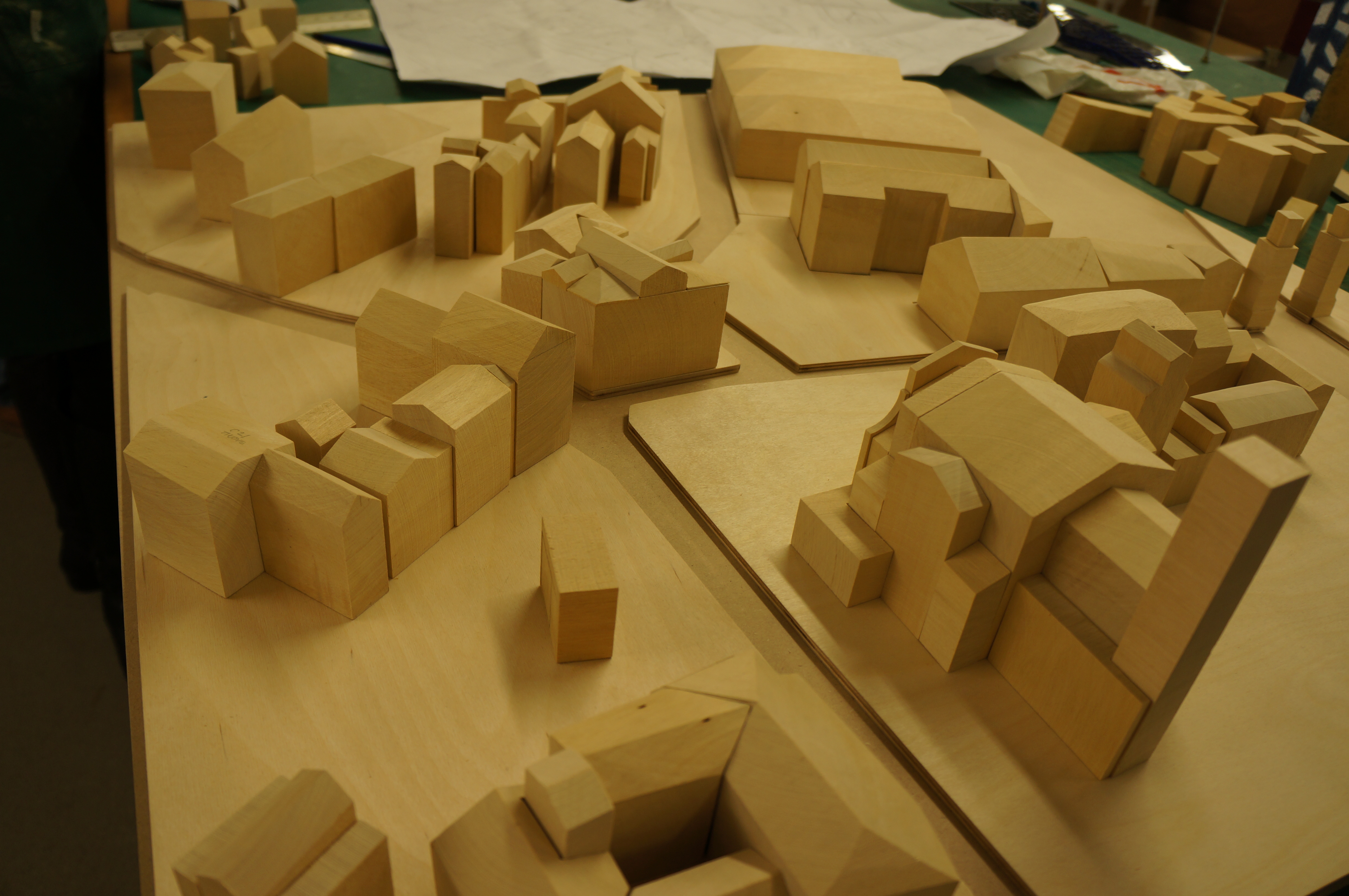
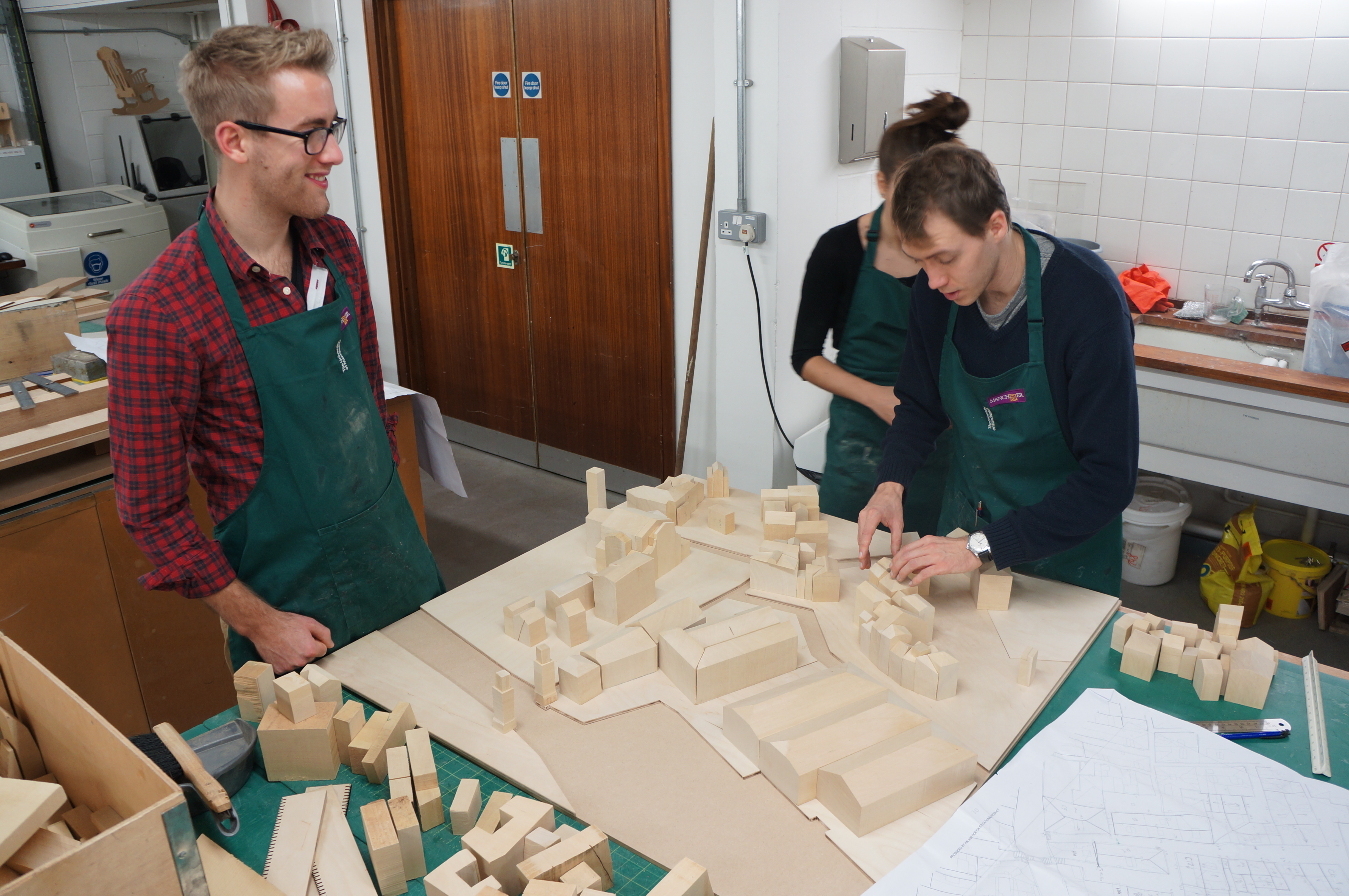
Campo San Martino, Venice Site 1:200 Master Plan Model
This year 6 Group project uses Jelutong block to create the busy built up area of Venice, Italy where the focus site of their brief is located. Once complete individual site study models will be placed in context to demonstrate their relationship to the existing constructions and canals in the area.

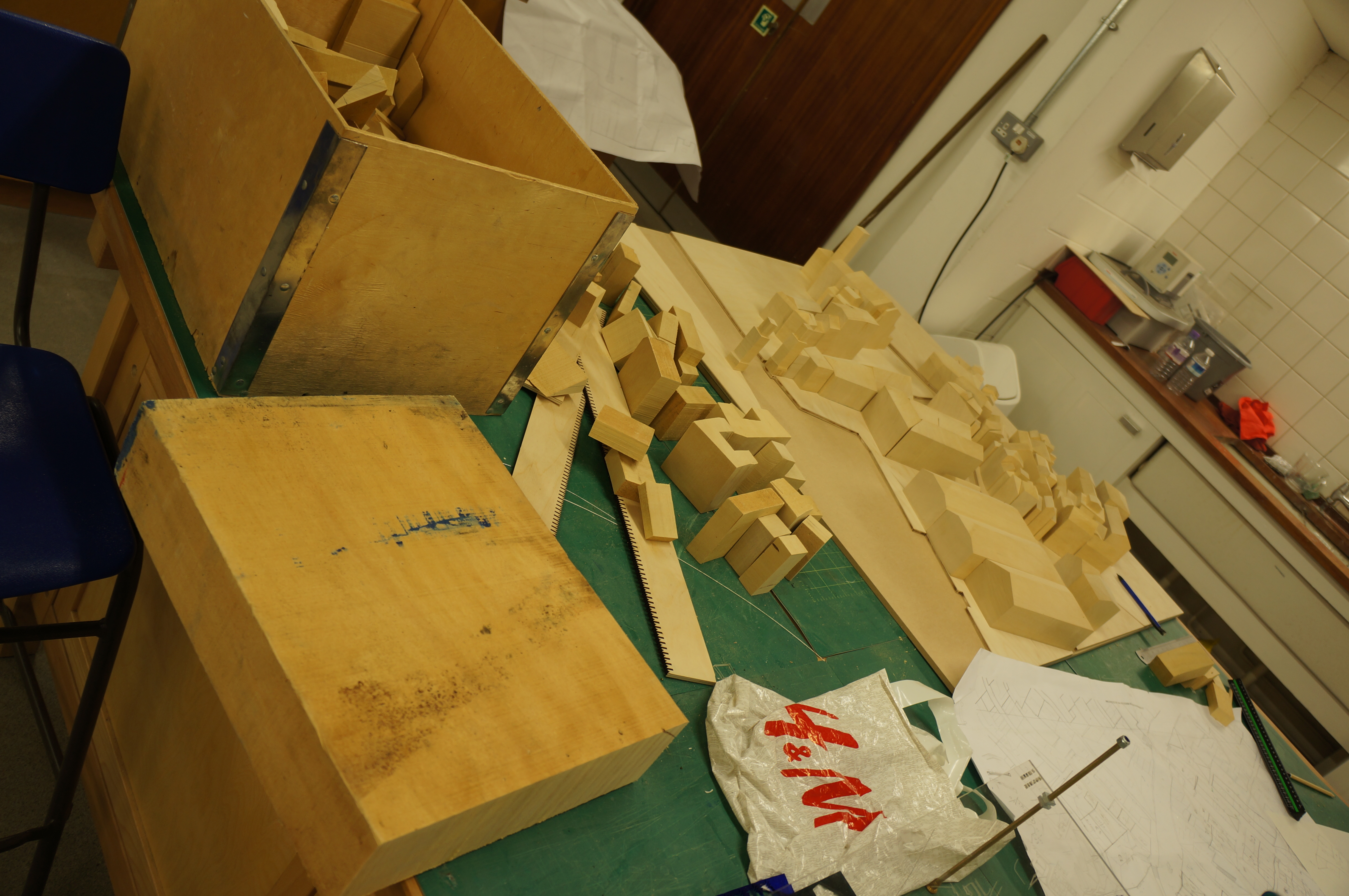 Dividing up time consuming tasks like mass producing bespoke block model shapes can be sped up by involving all team members as long as everyone has a clear understanding of what is trying to be achieved overall.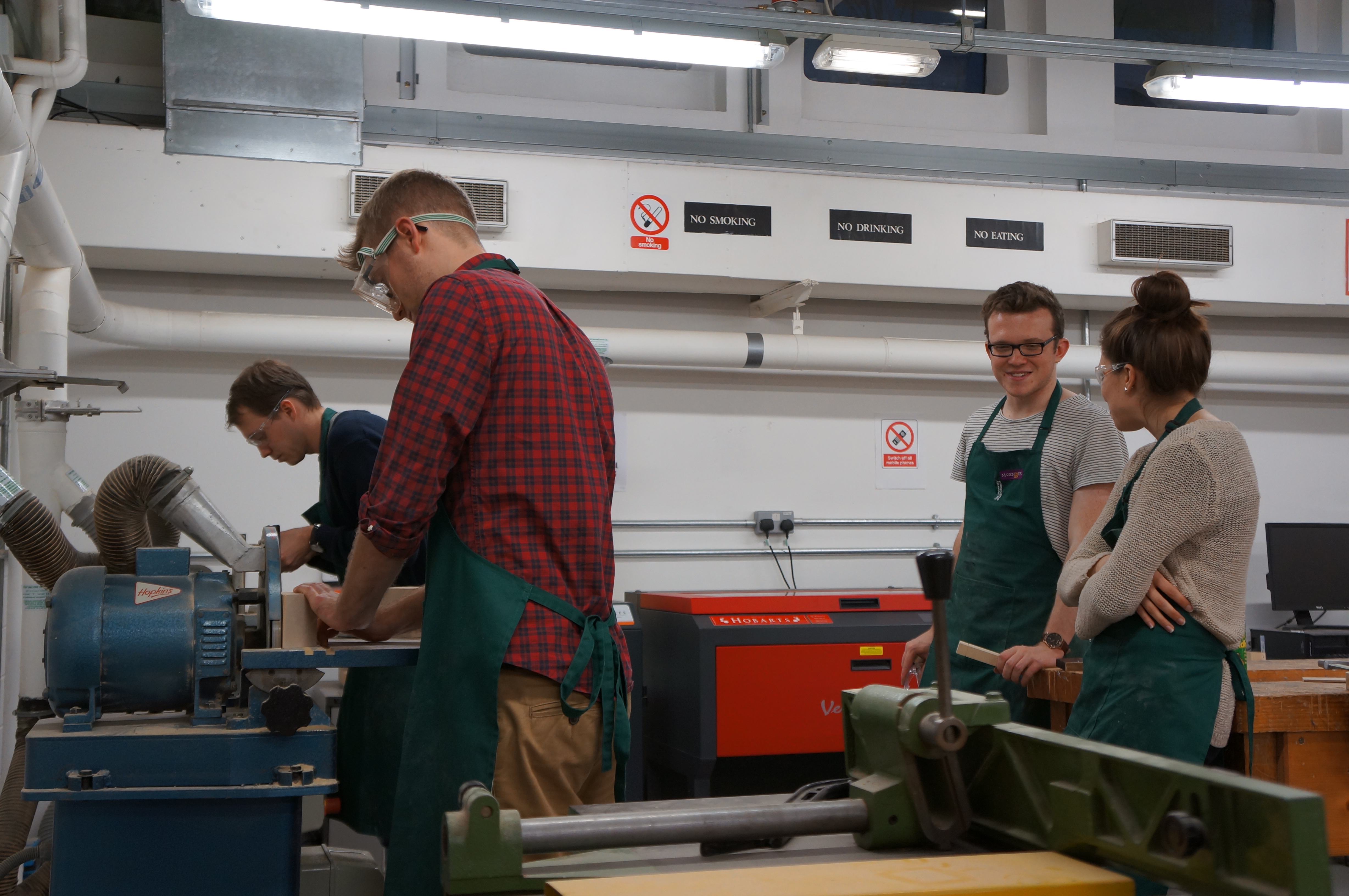
Pavilions…..
 Danielle Foster and Patrick Gorman have begun making their moulds for concrete casting which will take place at the Sheds over the coming weeks. The actual concrete casting process will be time consuming and potentially costly so spending time to get the moulds right is essential.Â
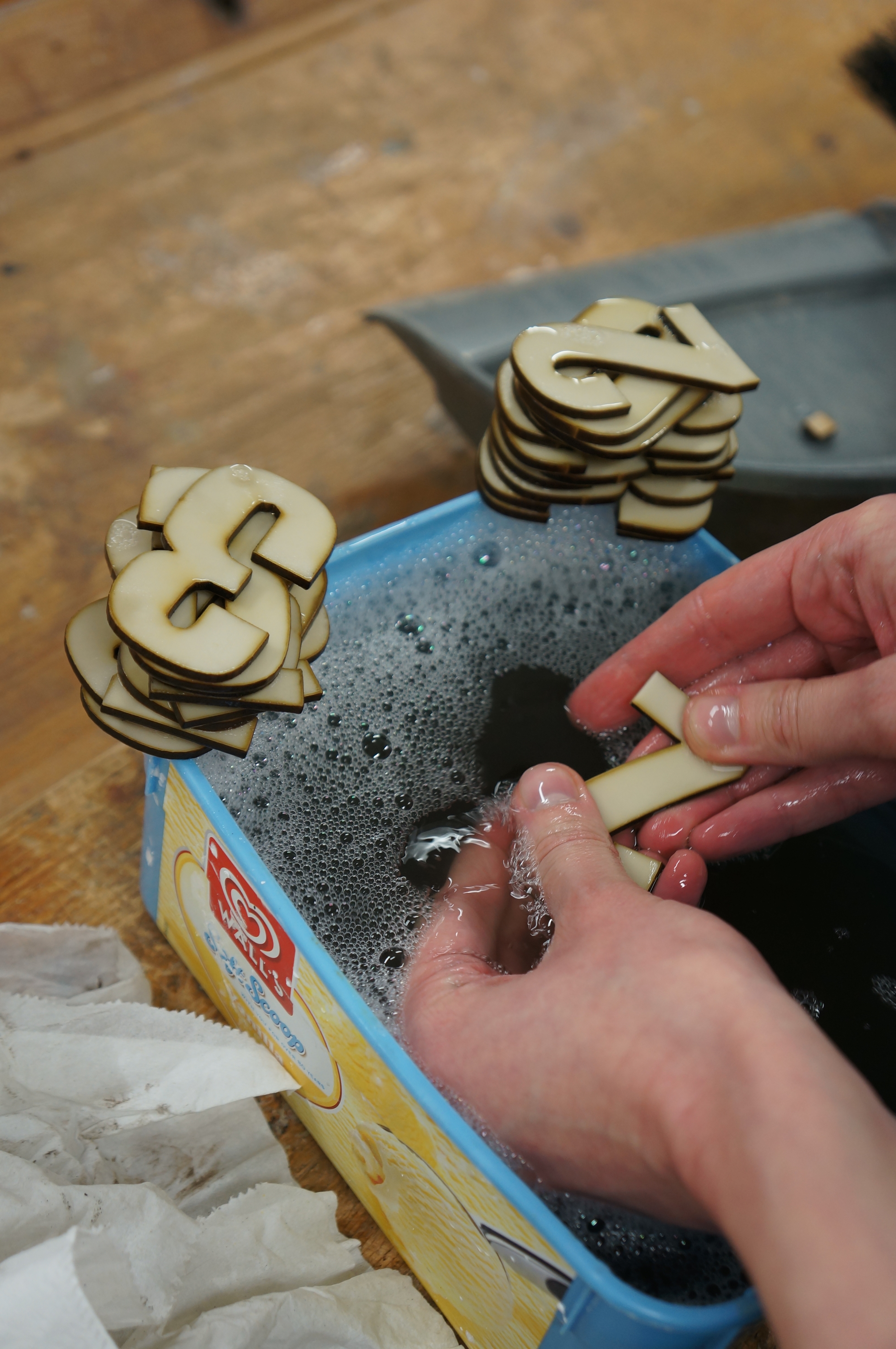
Danielle Foster and Patrick Gorman have begun making their moulds for concrete casting which will take place at the Sheds over the coming weeks. The actual concrete casting process will be time consuming and potentially costly so spending time to get the moulds right is essential. 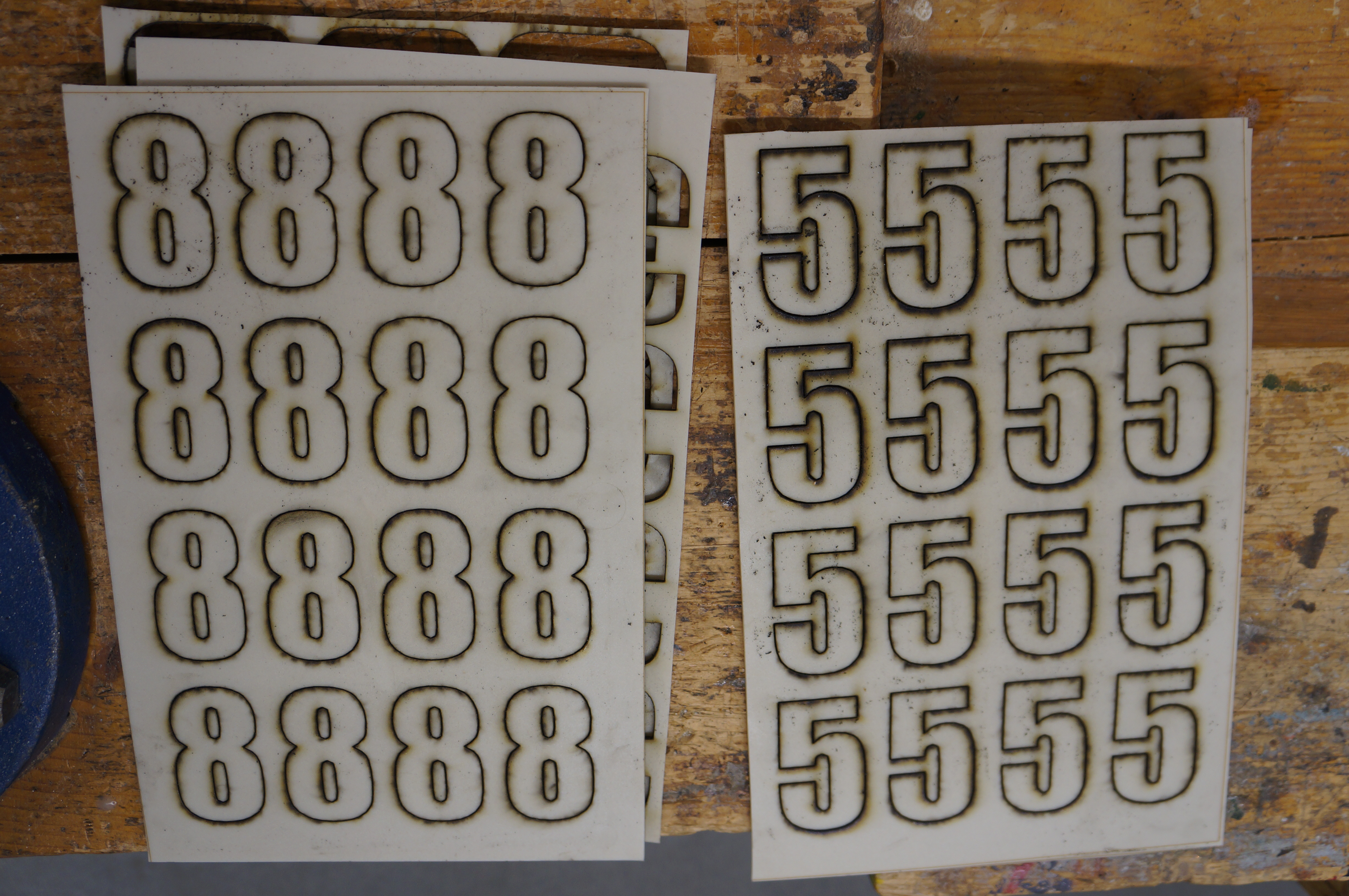 Myself and Jim spent almost two days cutting components on our circular saw to make the moulds for the blocks. each mould will produce a positive and a negative indent to allow each brick to fit together. Each brick will also be numbered using the rubber number profiles the group tested at the previous stage of development. Cutting this material takes a little practice before going ahead to cut hundreds of components. The rubber had a tendency to melt and blacken as it was cut meaning that cleaning was required post cutting.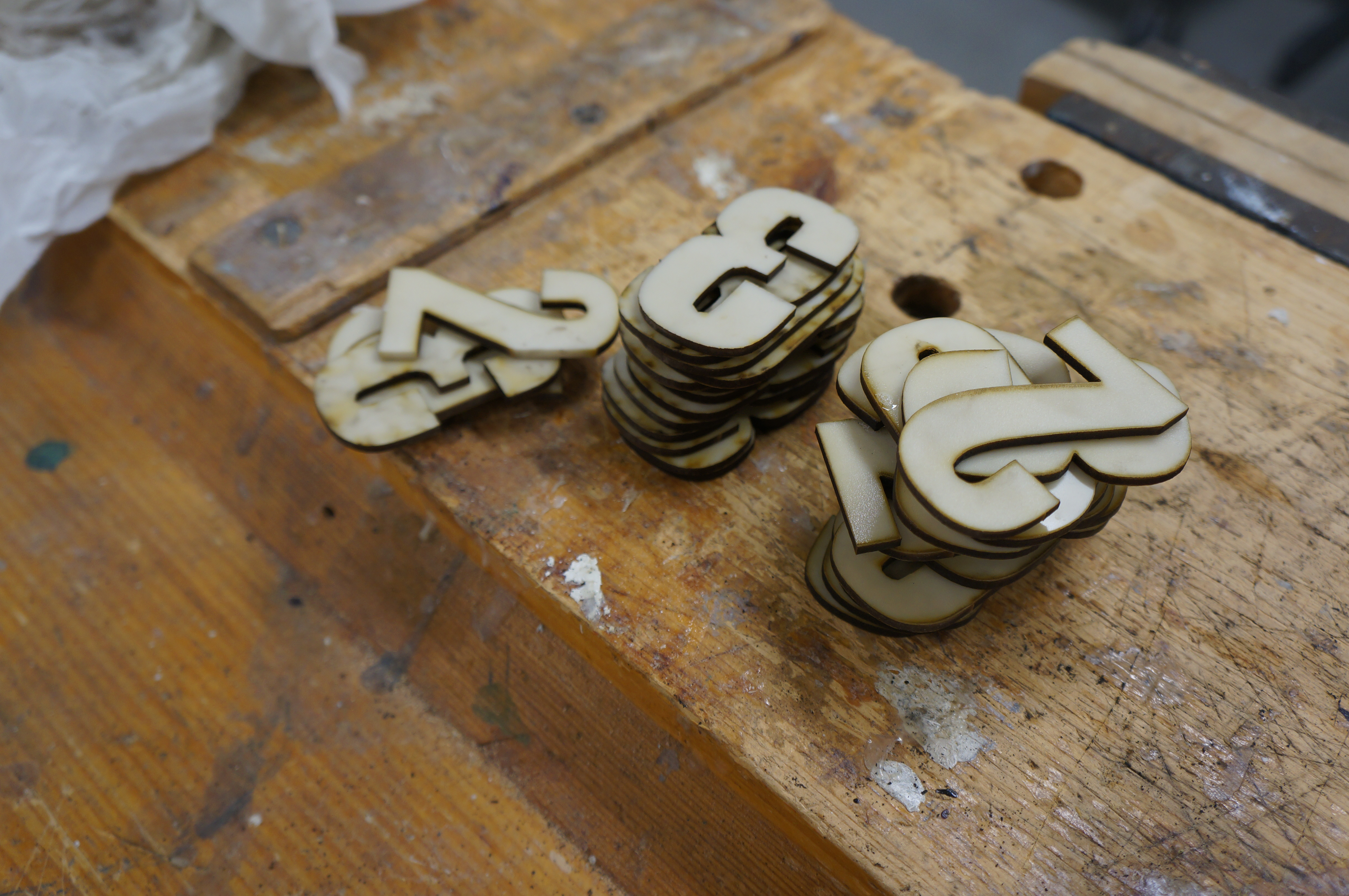
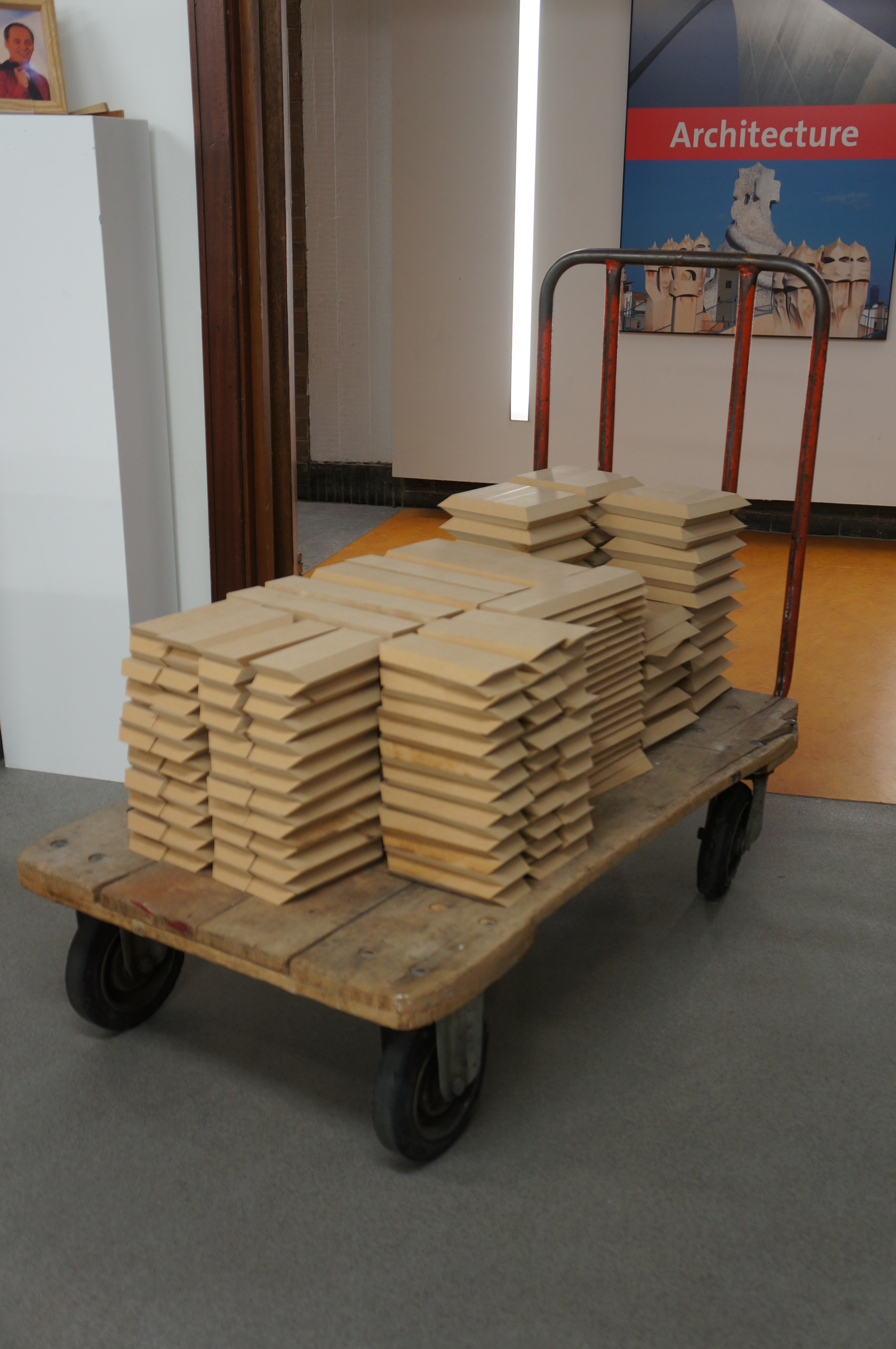 Hopefully we’ll start to see some of the finished components coming in the next few weeks. We’ll post an update when we do.
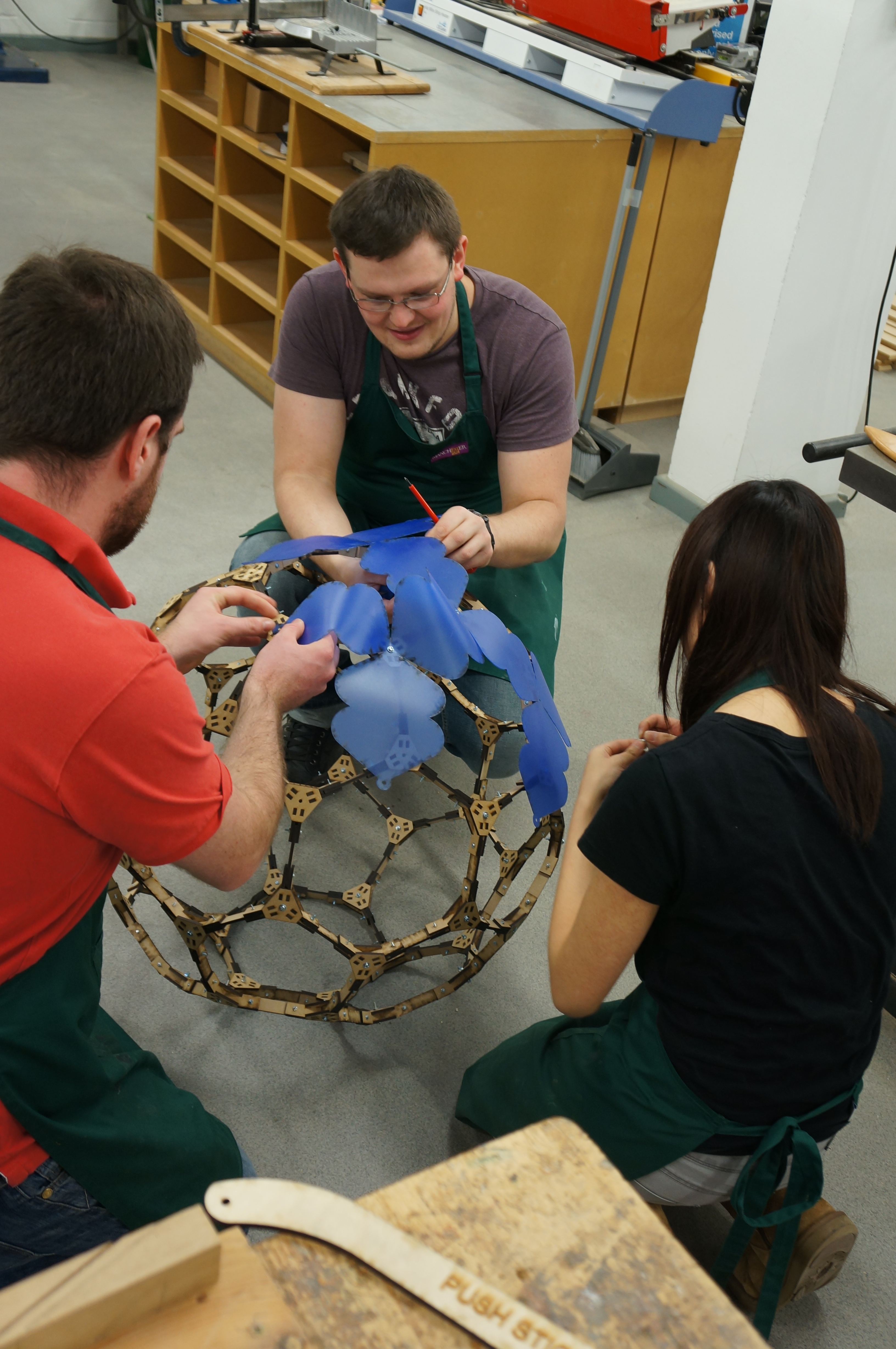
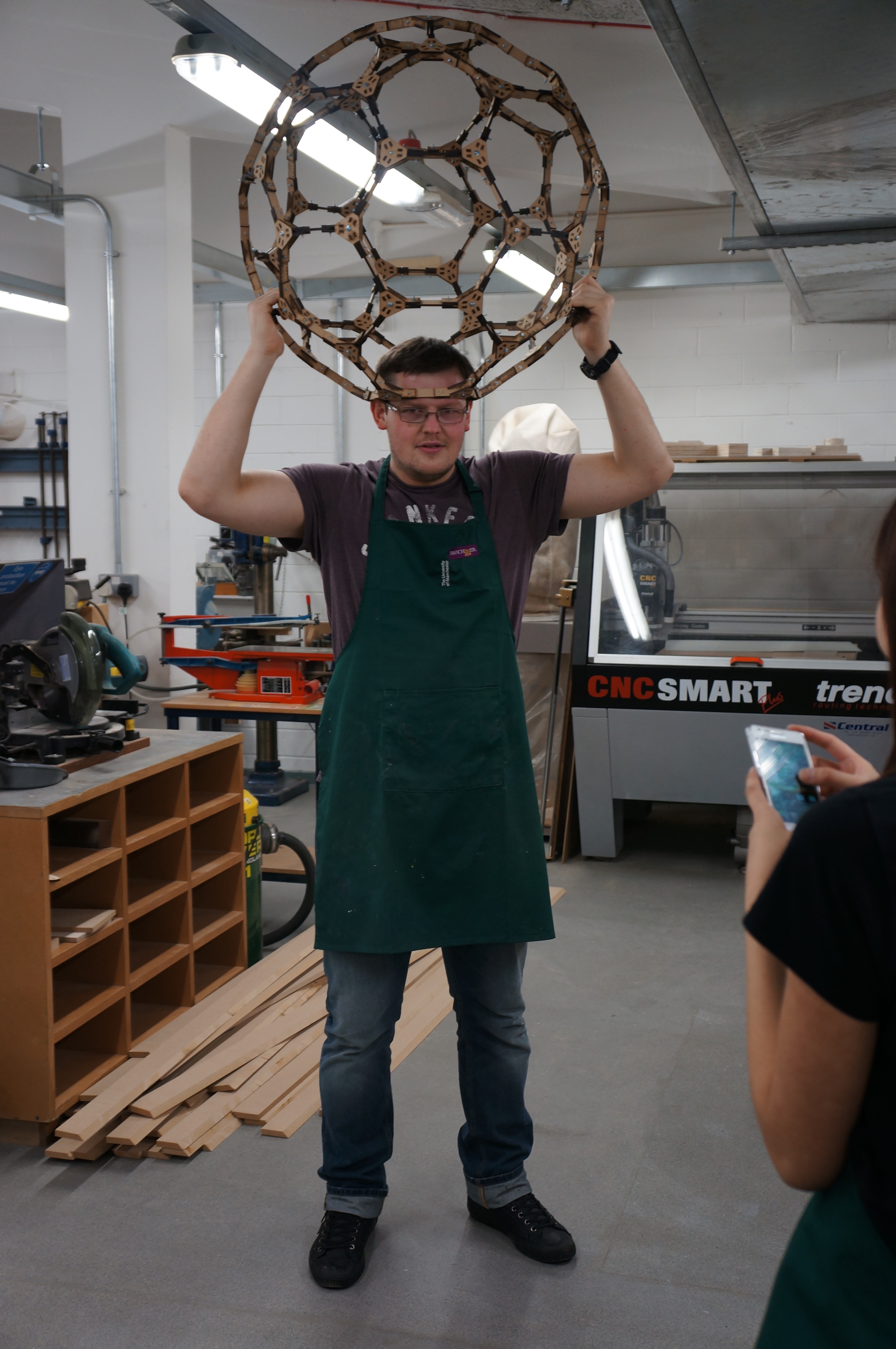
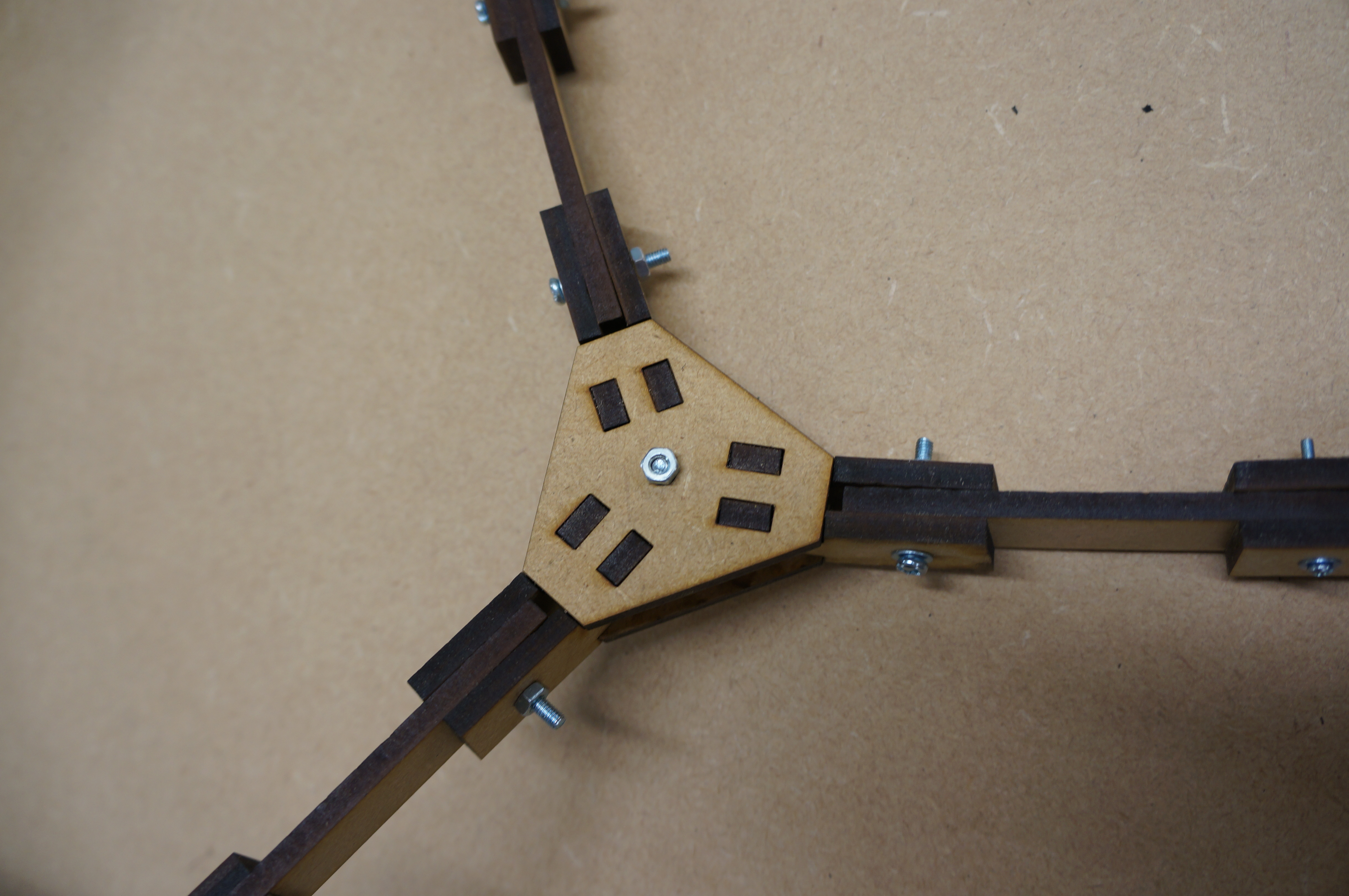 Further testing was required in Alexander Valakh and Lorena Chan’s design following some material and assembly issues.Â
Further testing was required in Alexander Valakh and Lorena Chan’s design following some material and assembly issues. 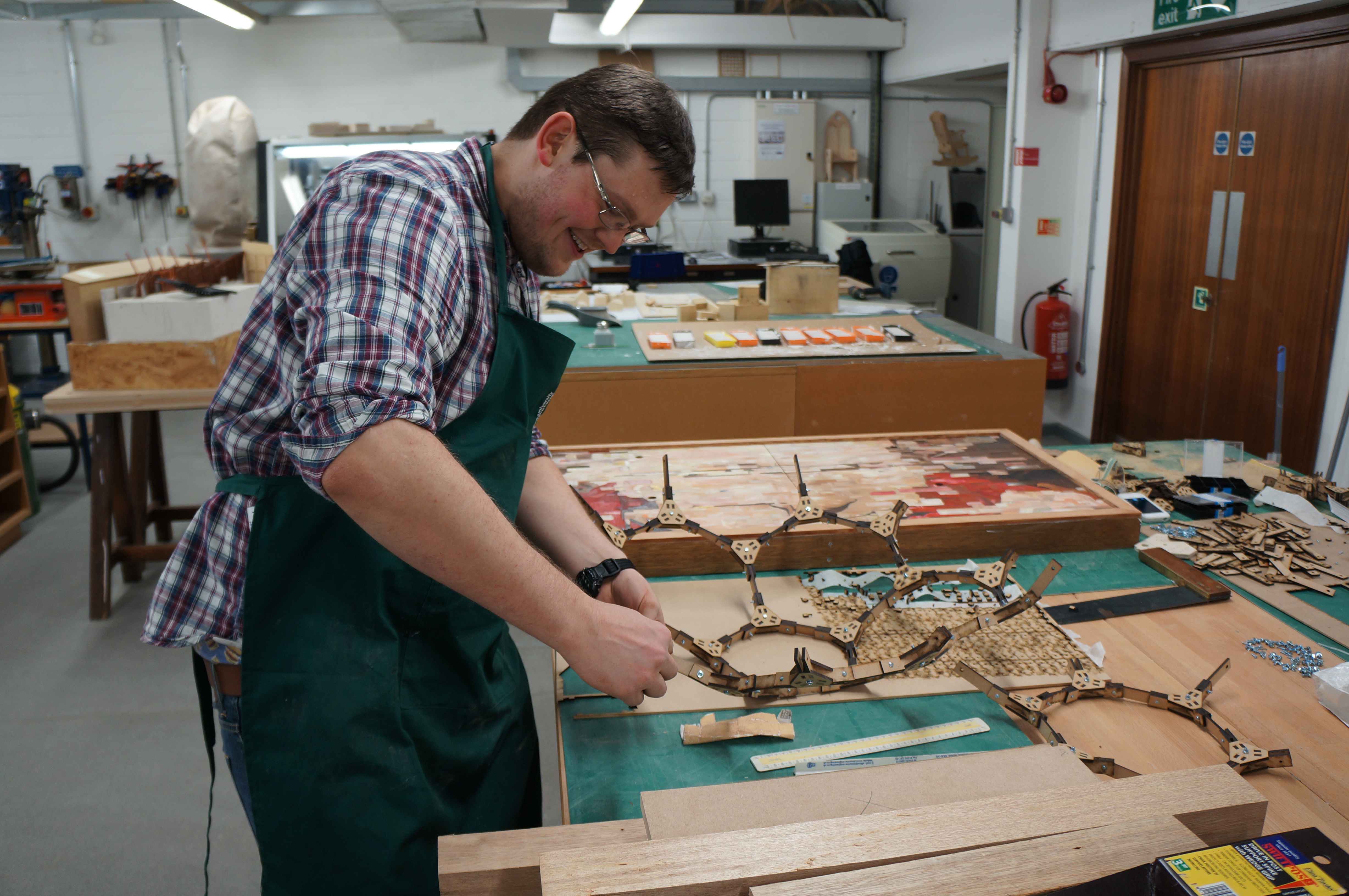
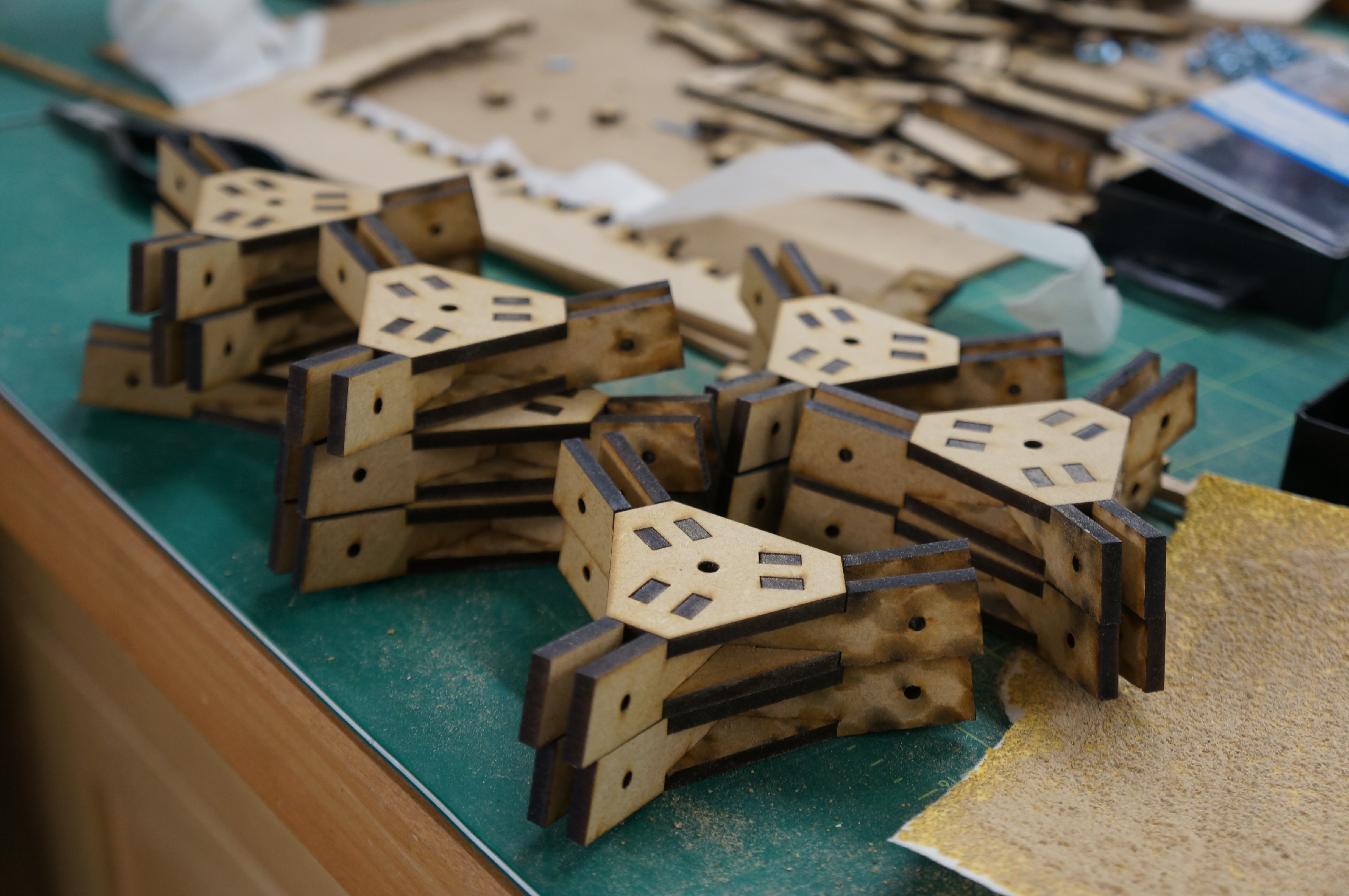
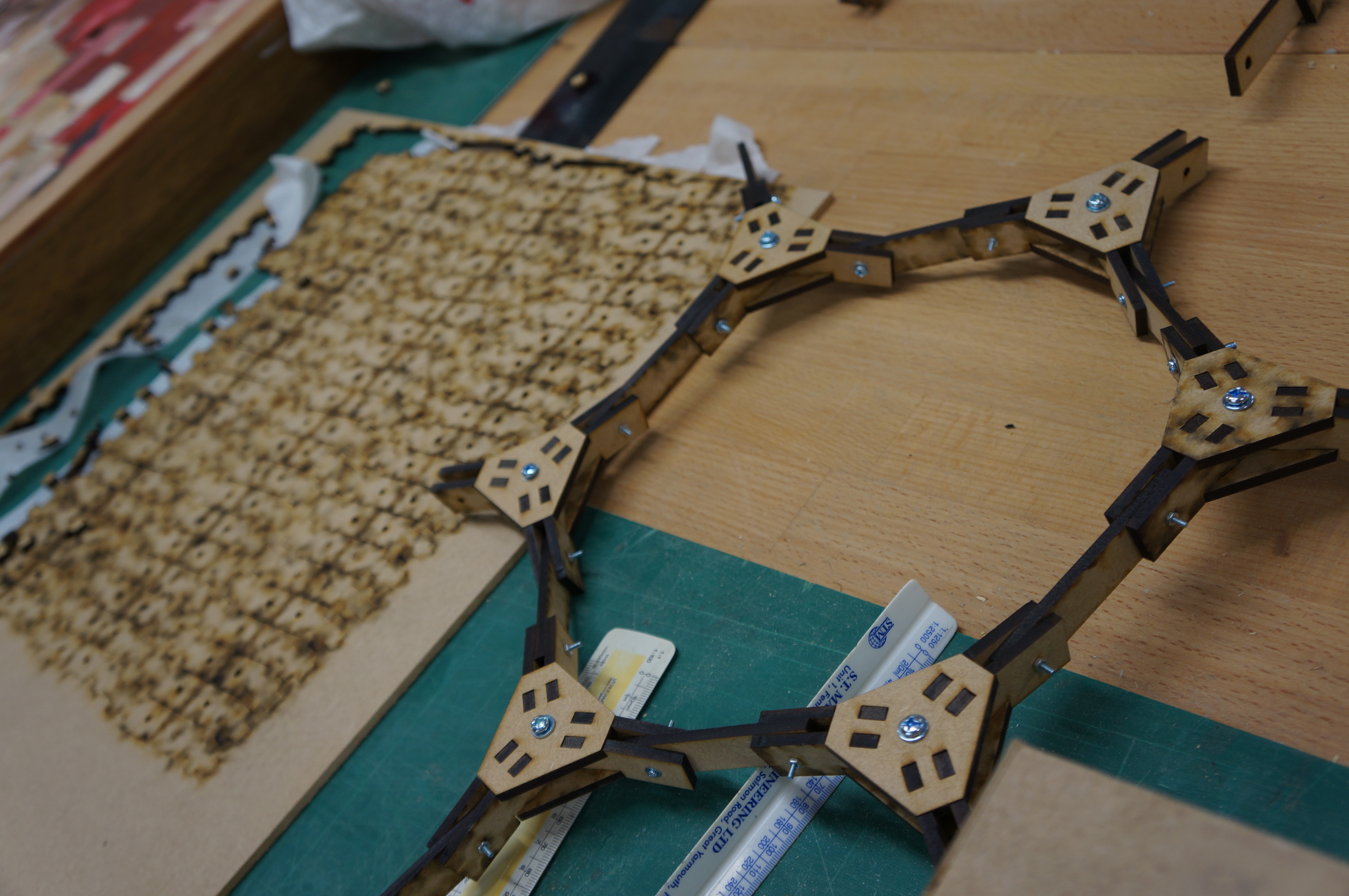
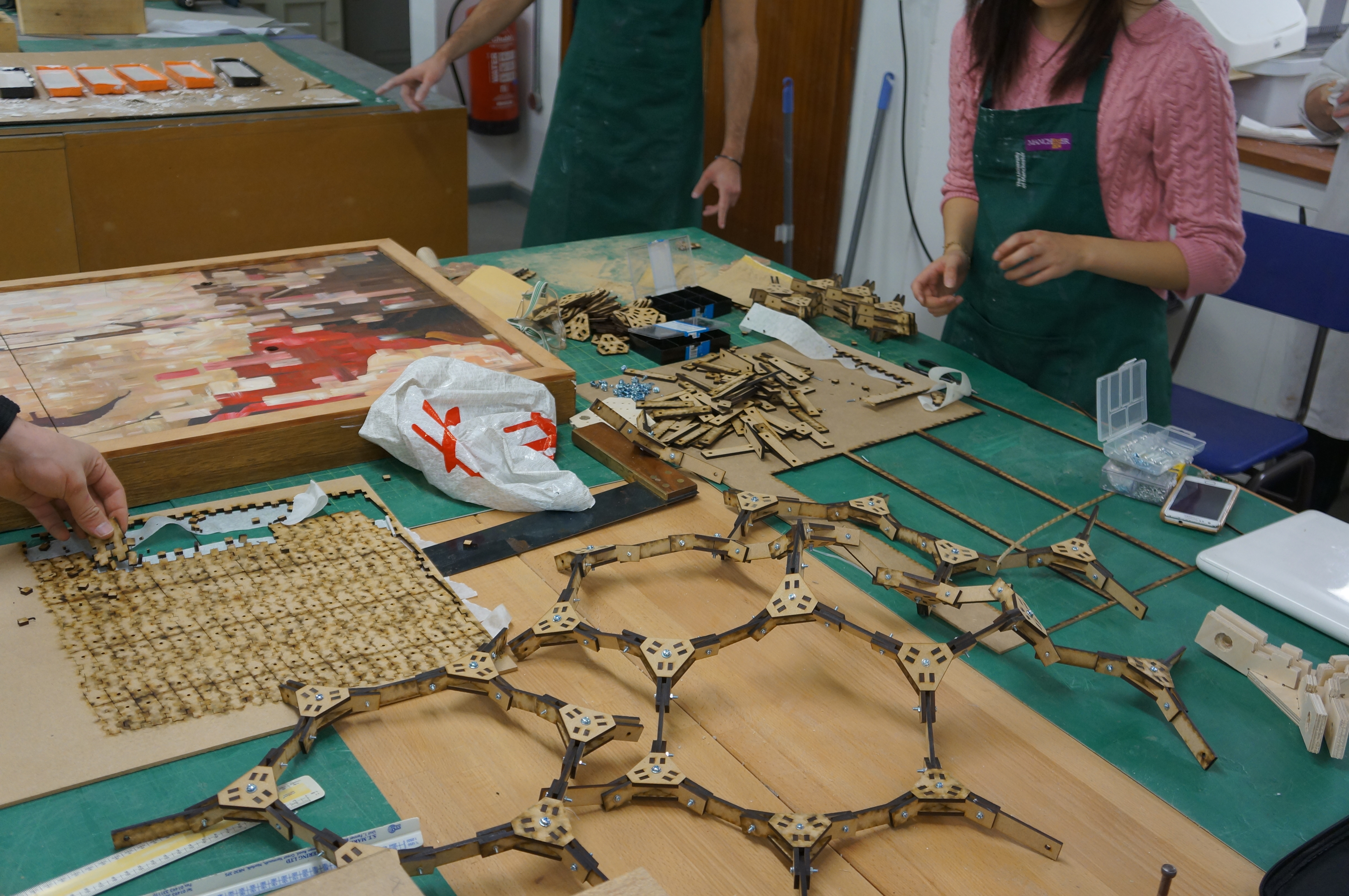 Once the main structural form was complete Alex and Lorena were able to test the ‘skin’ components that started life being inspired by poppies. At this stage they are still unsure about the exact material that will be used to create this component. This project has been given the green light along with the concrete blocks so we can expect more posts from both of these projects in the next weeks/months.
Isometric Drawing of St Paul’s Cathedral
During our recent store clearance we came across this amazing print packaged away. This famous isometric drawing of St Paul’s Cathedral in London was originally drawn over a period of 5 years in ink by hand between 1923 and 1928 as is described on the drawing itself. These kind of drawing skills are a real dying art and I find them captivating to see particularly when printed at this scale.

On taking the frame out of the store we found the antique print to be very dirty so spent some time cleaning it and repairing the frame to put it out on display where it should be. We saw the original larger scale print of this drawing earlier this year on display in the V & A museum in London. I’m glad we now have our own copy to marvel at complete with natural ageing!

 We hope to have the picture on display somewhere near the workshop soon so be sure to have a good look at the staggering detail it shows.
Scott
Workshop Closing Tuesday Morning (03/12)
The workshop will be closed tomorrow morning re-opening at 14.00. Apologies for any inconvenience caused.
Jim and Scott
Jelutong Blocks Back in Stock for Masterplan Modelling
After the recent onslaught of master plan models our stockroom was left somewhat depleted! Master plan models more often than not will require large pieces of wood to create multi-storey buildings in block form.
Whilst using laminated MDF sheets may seem like a cheaper option it is worth considering the huge amount of waste and resulting impact to the environment as a whole and the immediate surroundings. Cutting masses of MDF sheeting produces a lot of dust that when inhaled excessively can be very bad for your health (Wear Dust Masks!).
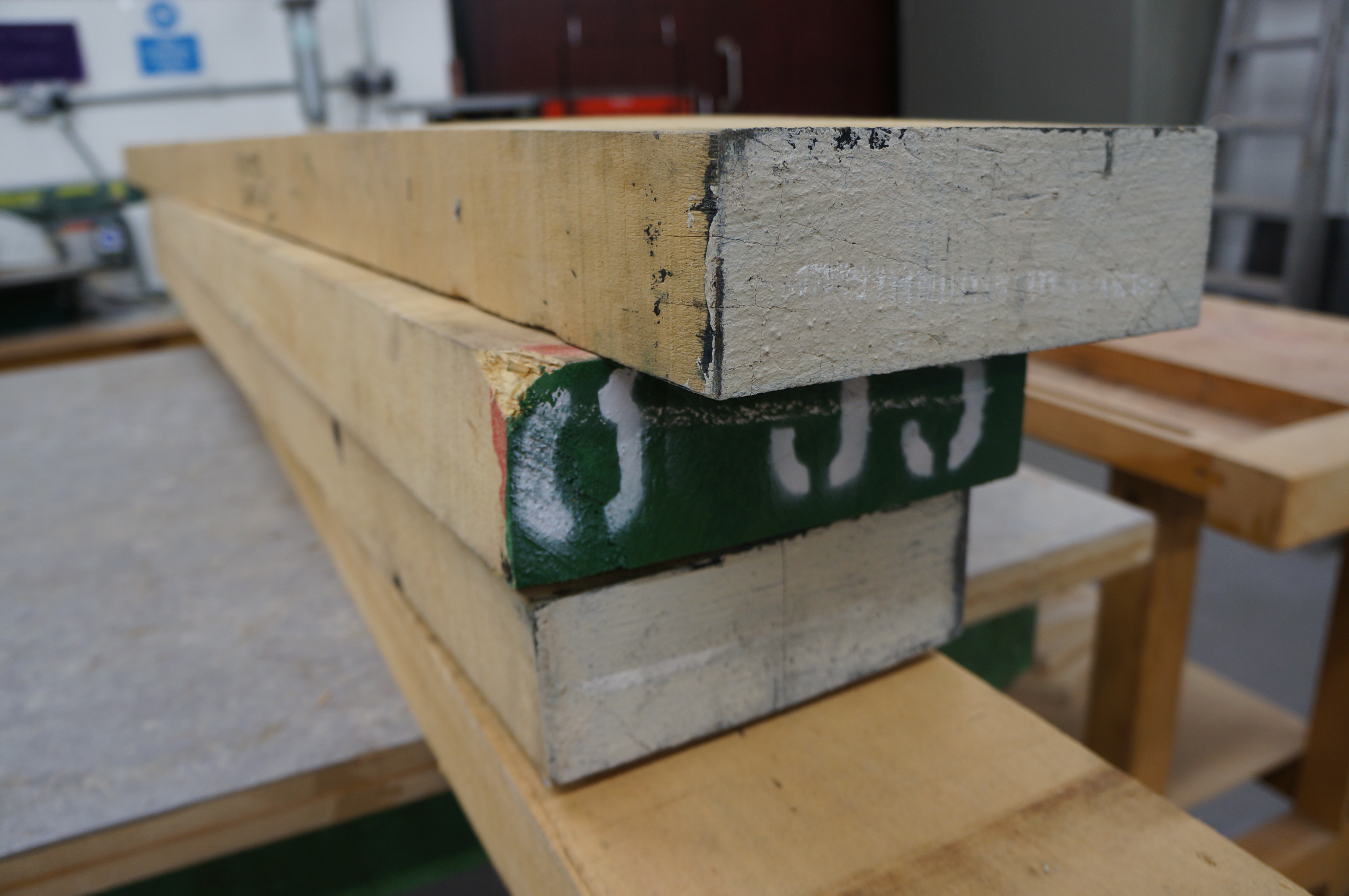
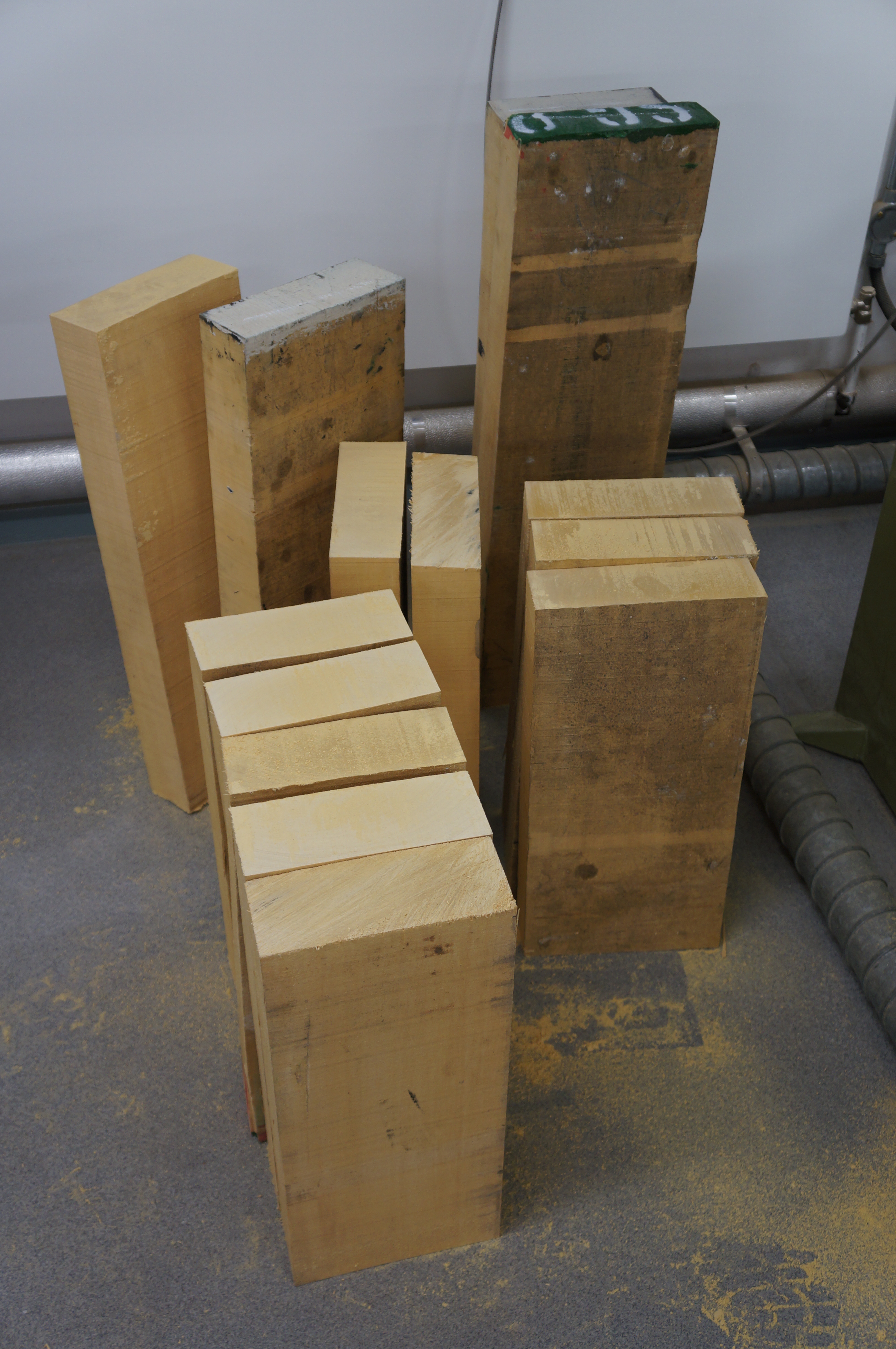
Laminating sheets together can also be time consuming and the finished aesthetics are less desirable. Jelutong block may seem expensive (Prices ranging between £15 to £40 per block) but the time saved in laminating and finishing may be comparable as the majority of master plans produced here can be achieved using a single £15 block when used economically.

Be sure to check with us about costings and the best approach for your model before rushing into anything. We use these materials almost everyday and can offer sound advice that will help you make the best of your projects in the most cost effective way.
Jim and Scott
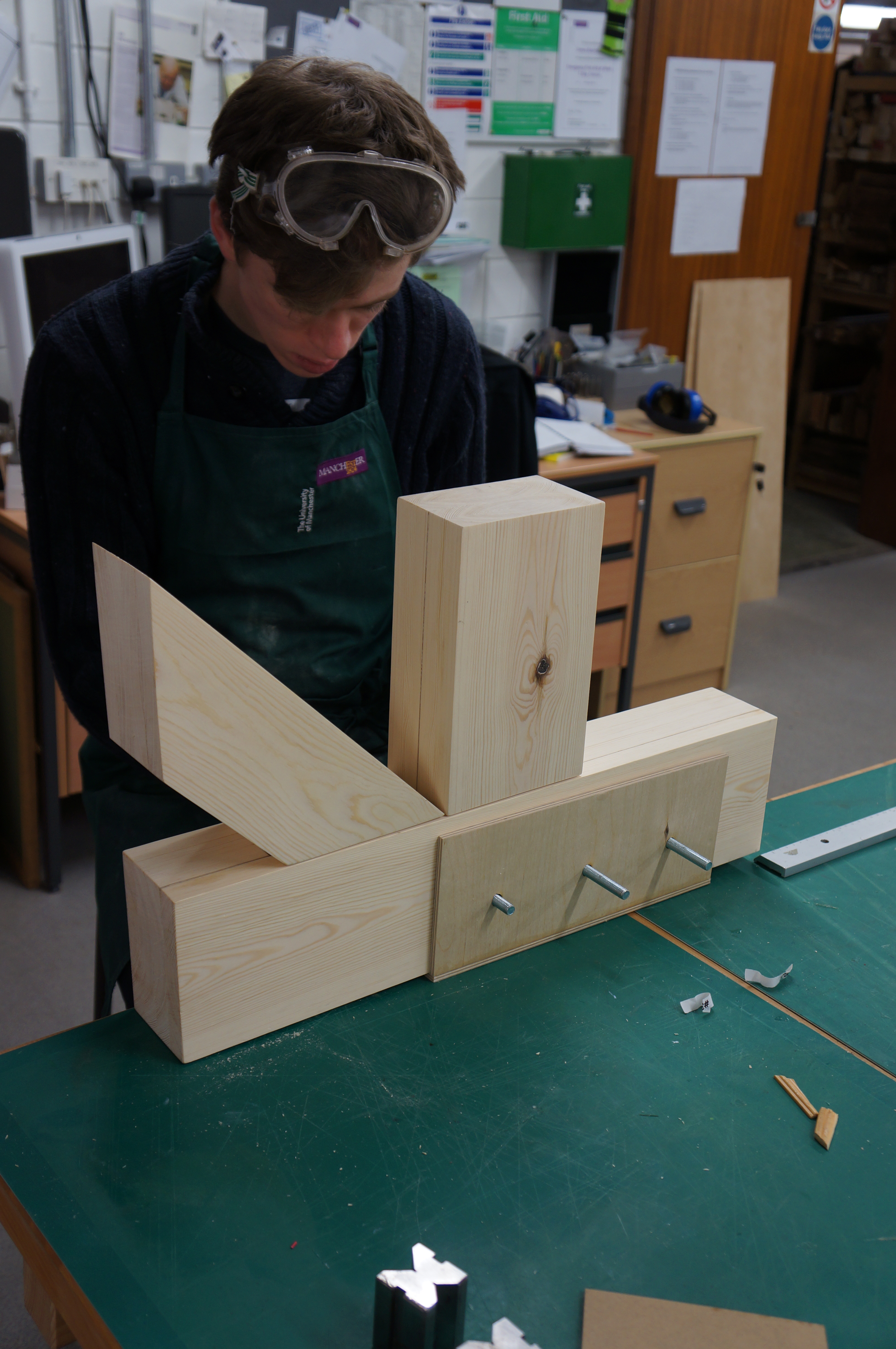
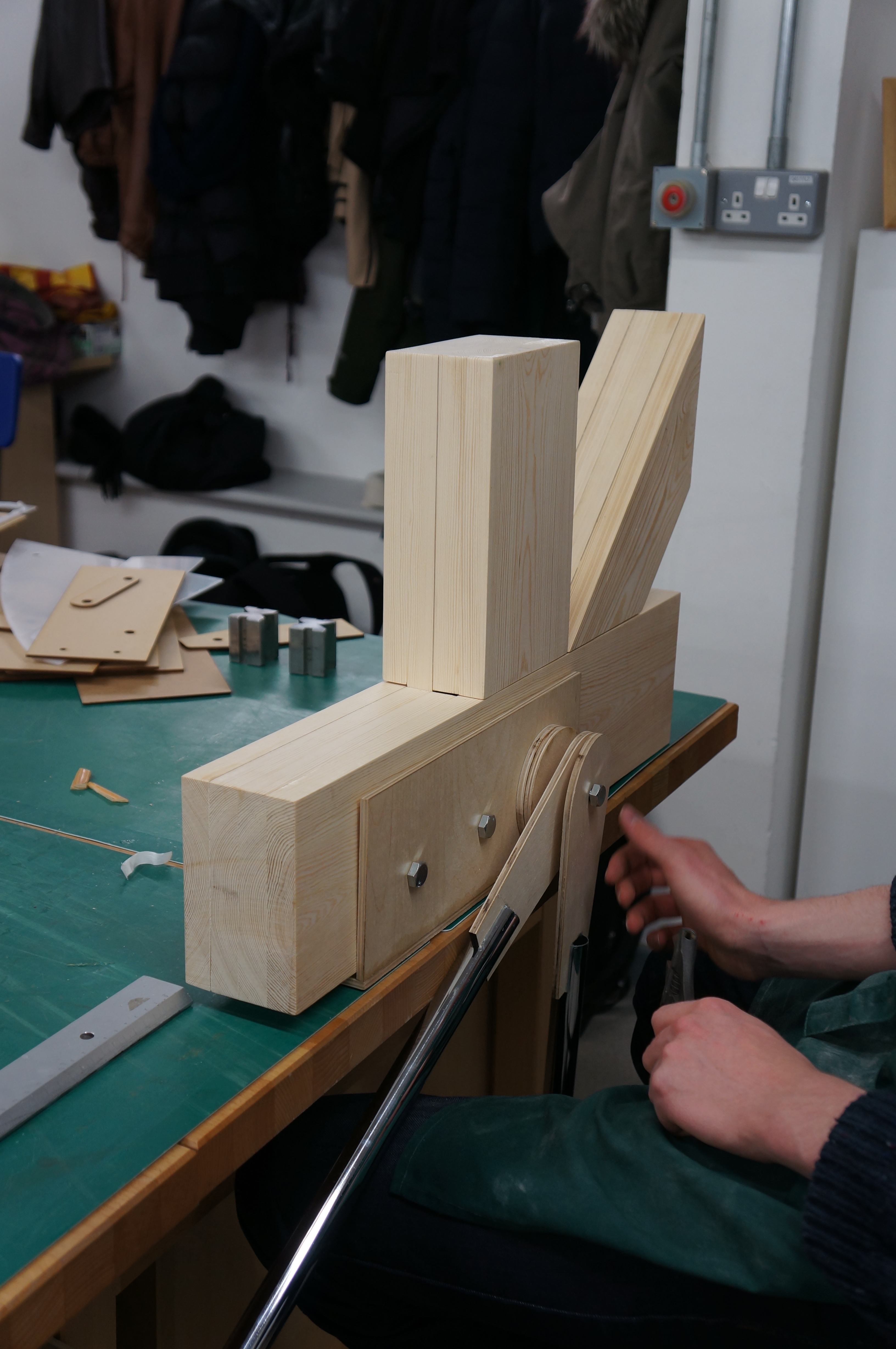
3rd Year Structural Detail Models
Designing a building requires attention to every detail. This attention must take into account the limits of construction materials and how they can be managed an assembled in reality.
The only way to do this well is to have a good understanding of construction and material mechanics. Structural detail study models allow us to focus on specific junctions of framework and often bring potential problems with assembly to our attention.
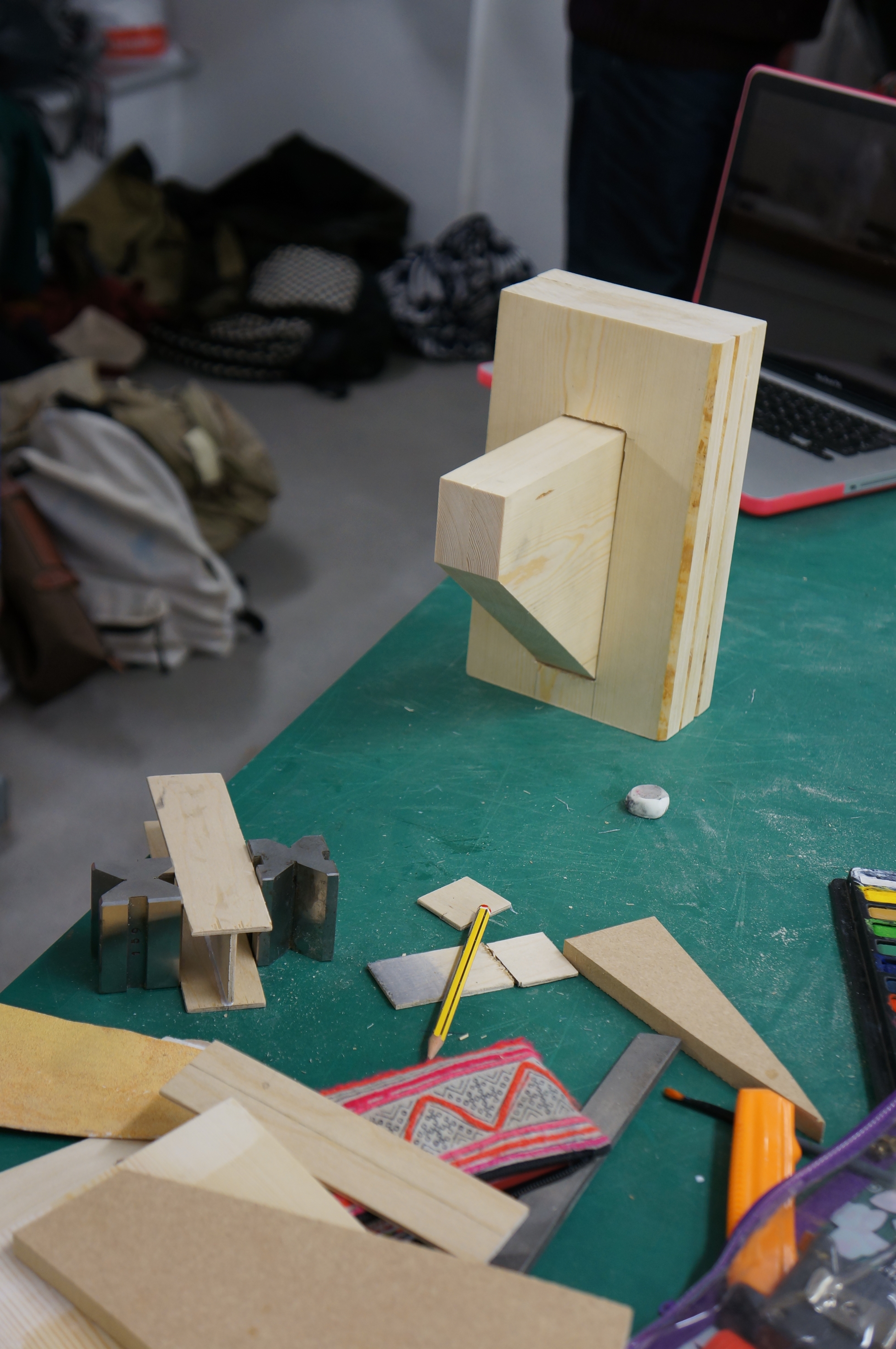
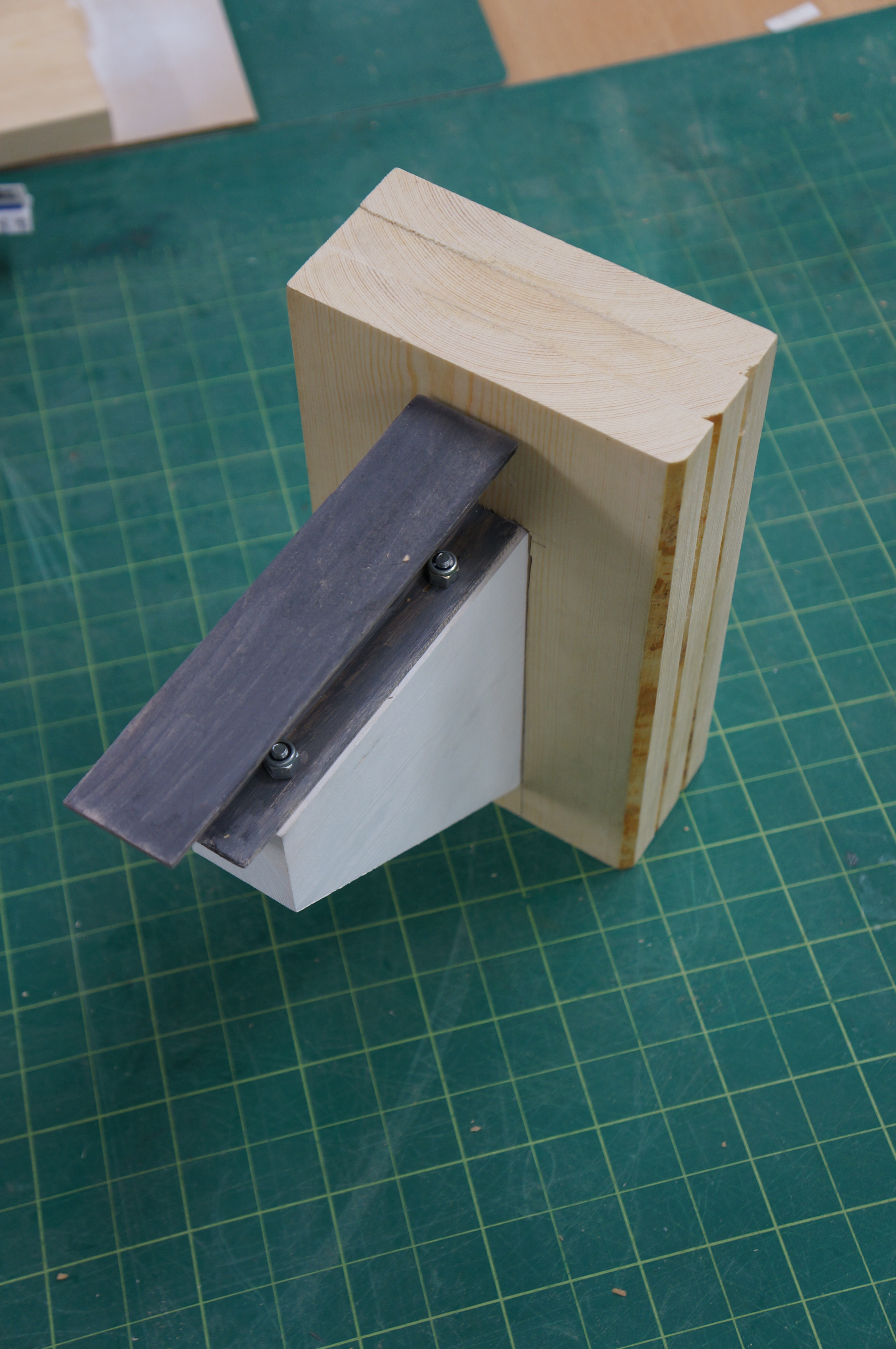 Whilst it is very important that you, as an architect in training, have a thorough understanding of building materials. These models should not focus too much on the 1:1 ‘real world’ materials. Your area of study is in understanding how components interact or don’t interact with each other in terms of their physical shape. Testing material strengths, weaknesses and compatibility for a particular role requires much more in depth study and often more space than our workshop can provide.
The models shown on this post are made to mimic real materials to reduce weight and construction restrictions whilst still conveying their assembly effectively.
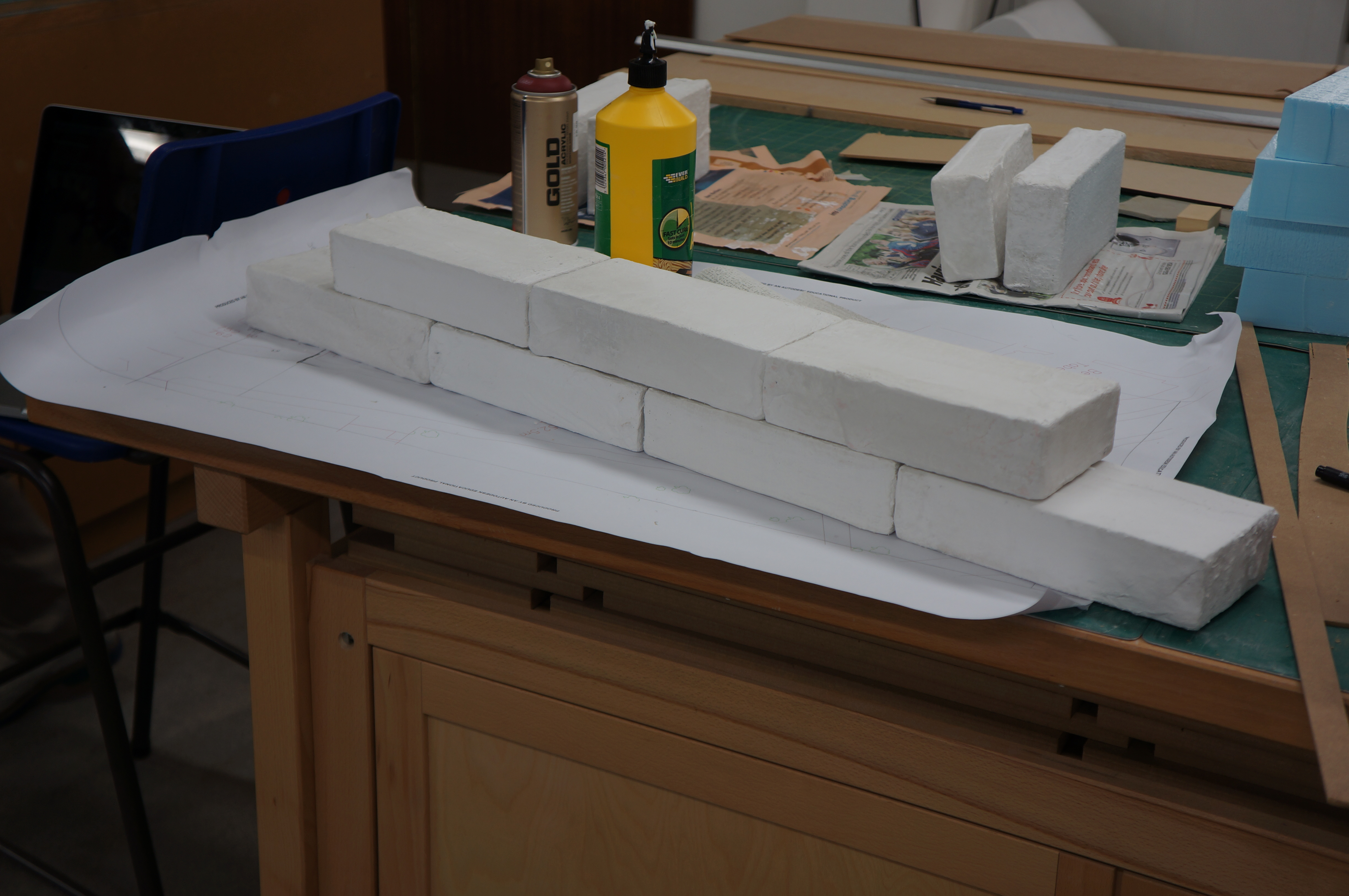
Model Archive and our Photography Studio Proposal
Over the last few weeks we have been trying to clear our extremely cluttered model store to record and archive all of our historic models. This has proved a huge success and brought to light some great pieces we didn’t know we had! The collection is fascinating and gives a broad range of styles and techniques used over the last 30 or so years.


 In ordering our store we have created some new space in which we hope to set up a photographic space to document your future work. This facility, providing we get funding, should be available sometime in early 2014. With this in place you will be in a better position to record your work before it leaves the building with high quality photos. This will also allow us to create a complete record of our produce and add to the already thriving Blog we have here.


Keep checking back here for more! Scott
Pavilion Development Continues
The development of the Dunham Massey Pavilions has been slowly progressing over the last two months with many different problems to overcome. Many of the original concepts have changed in scale and style whilst others have remained largely unchanged.
For Alexander Valakh and Lorena Chan the main problems have come from various material tolerances effect on their designs.
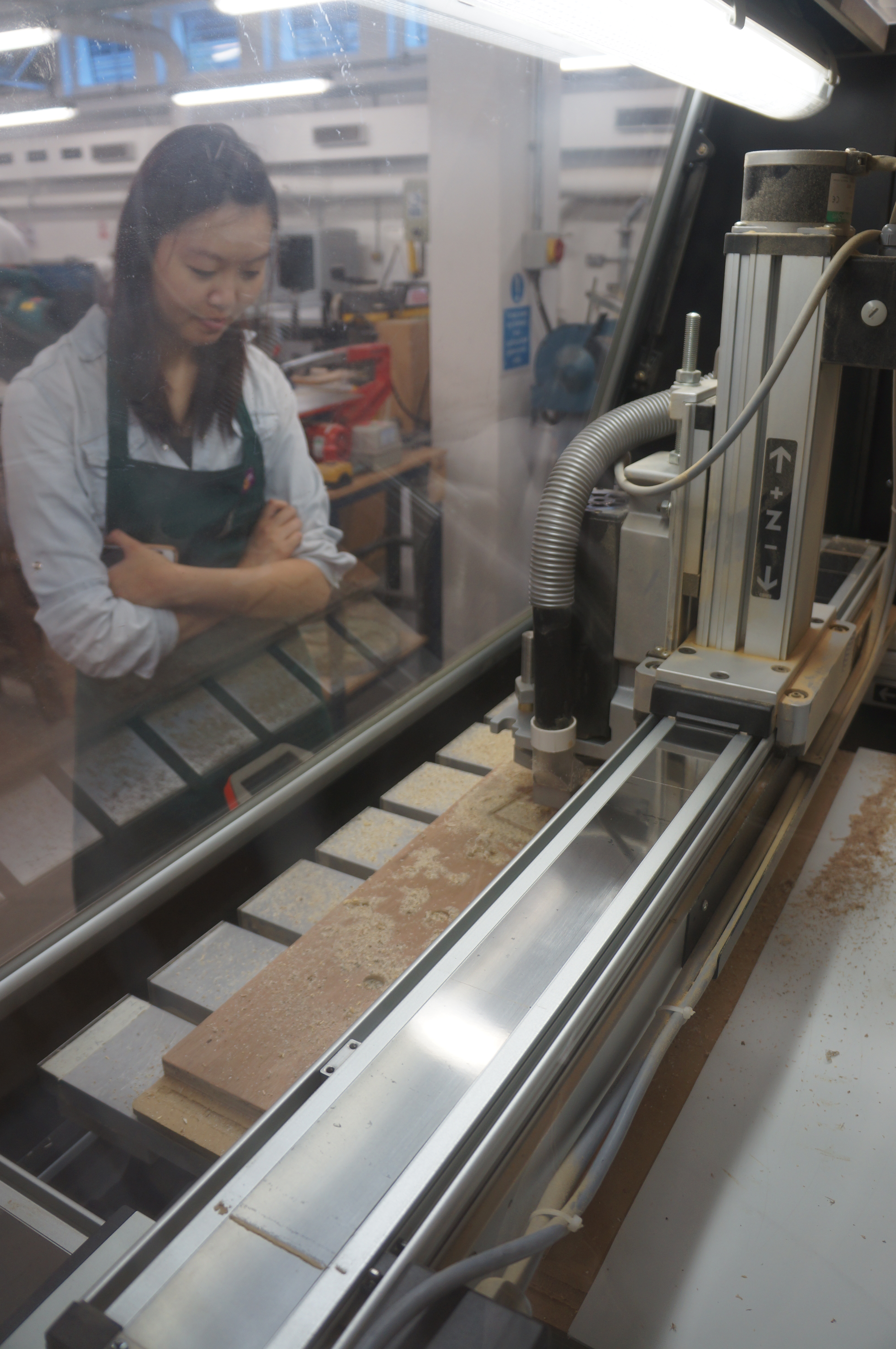
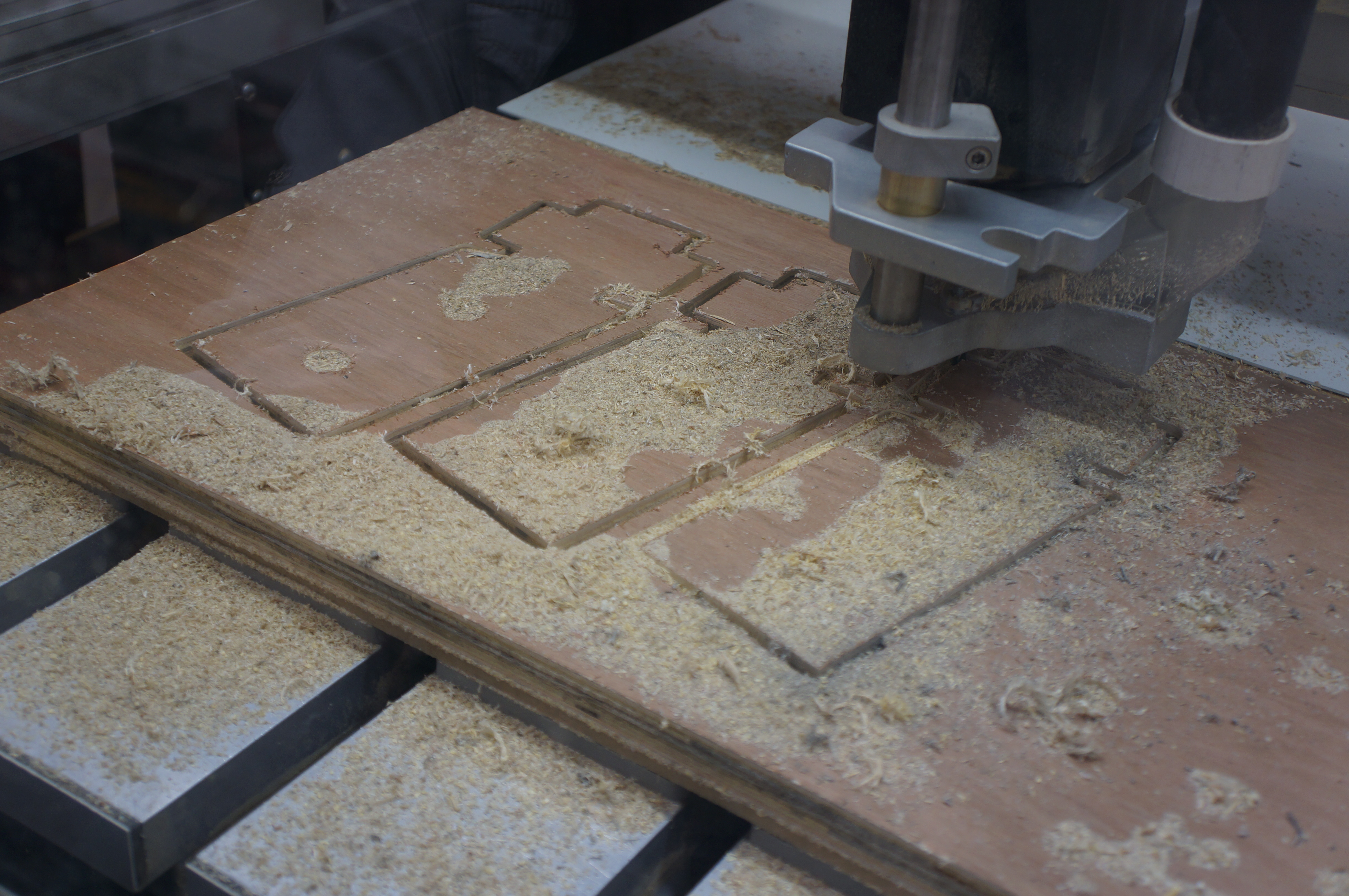
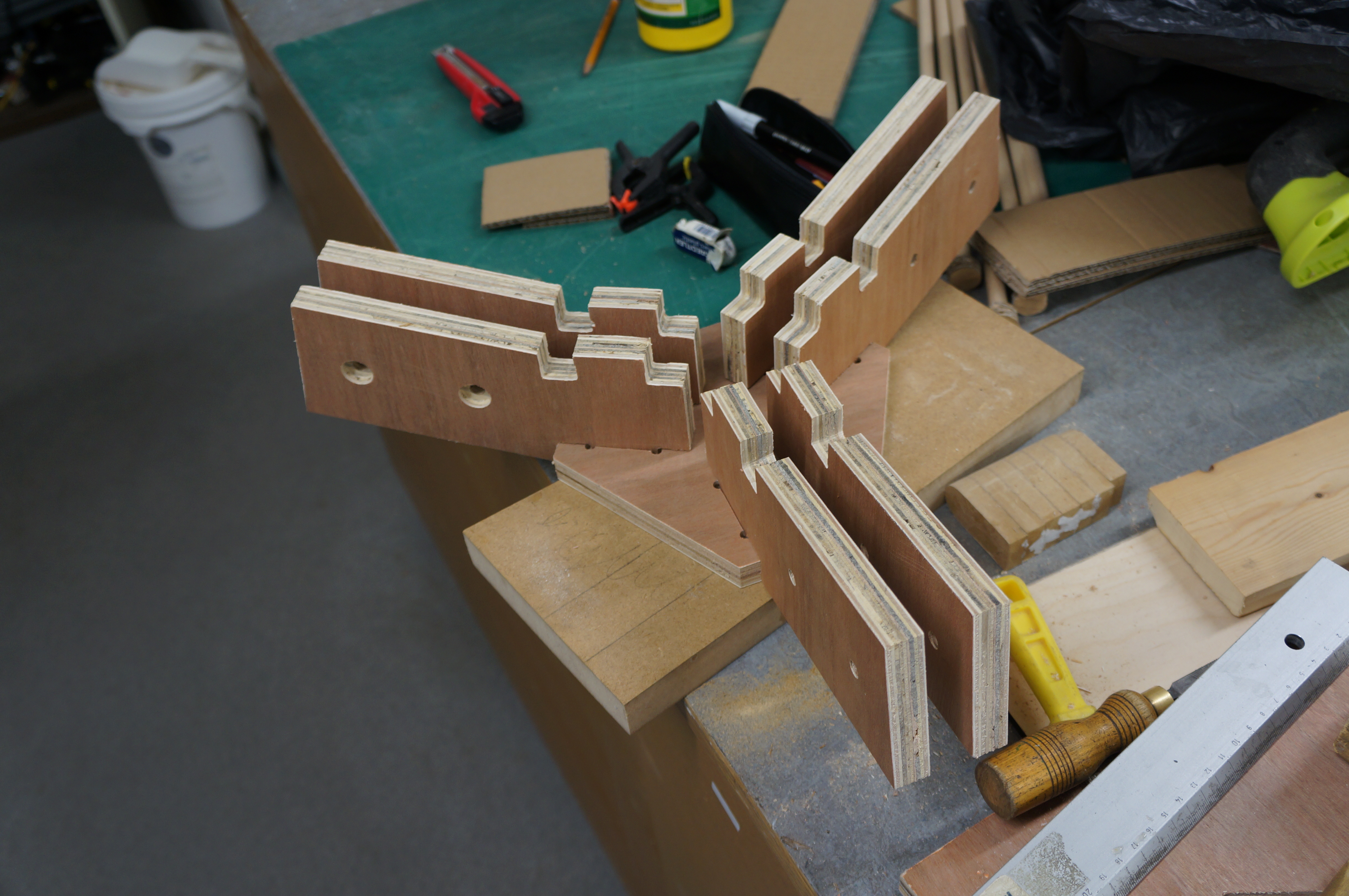 The group used the CNC router to cut plywood components for this phase of their design development. The original poppy concept that was made from cardboard and the riveted elements allowed a lot of flex. When applying the same ideas to a more durable and weather resistant material the same shapes could not be achieved. This is where 1:1 design development models come into use.
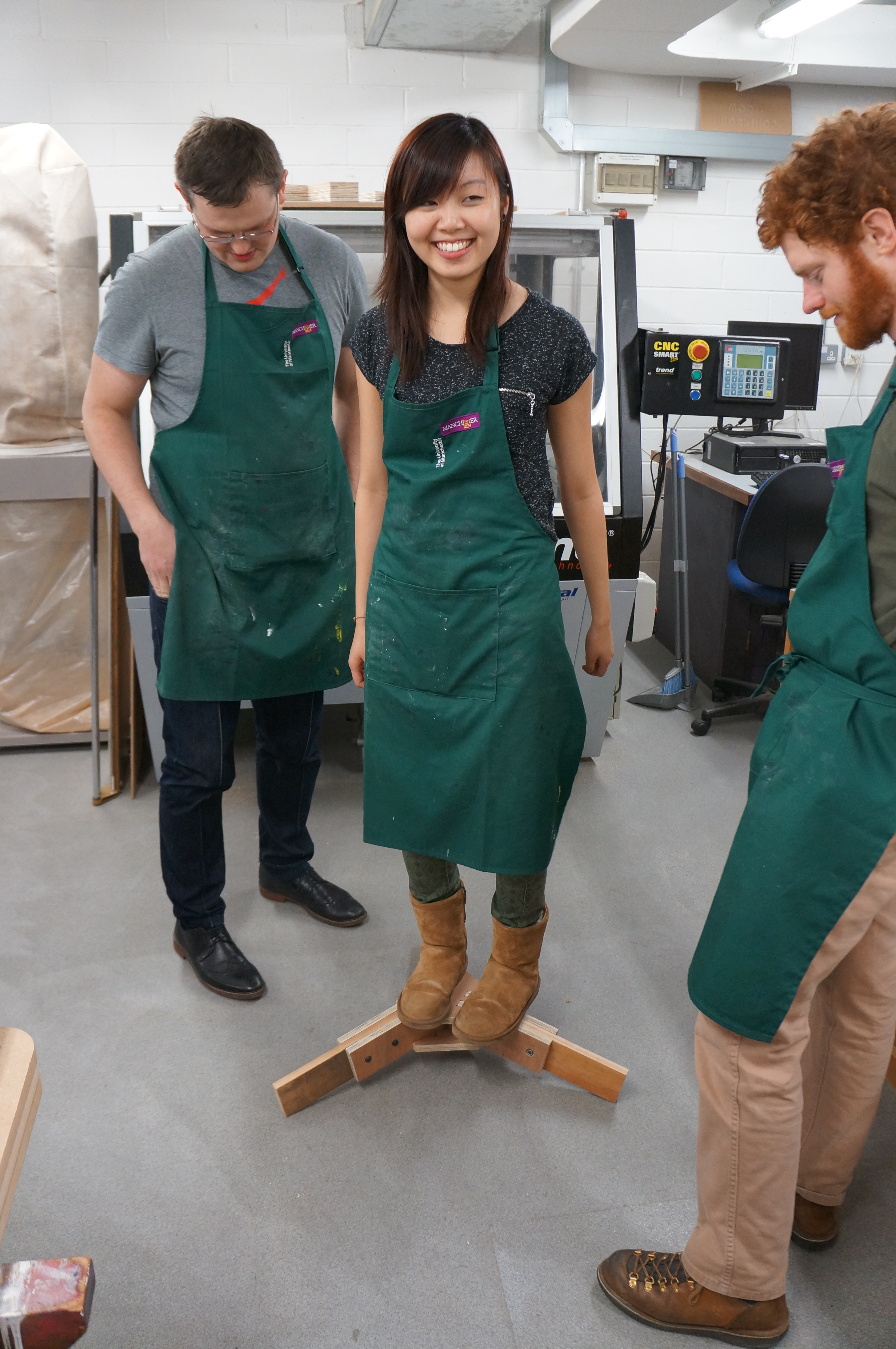
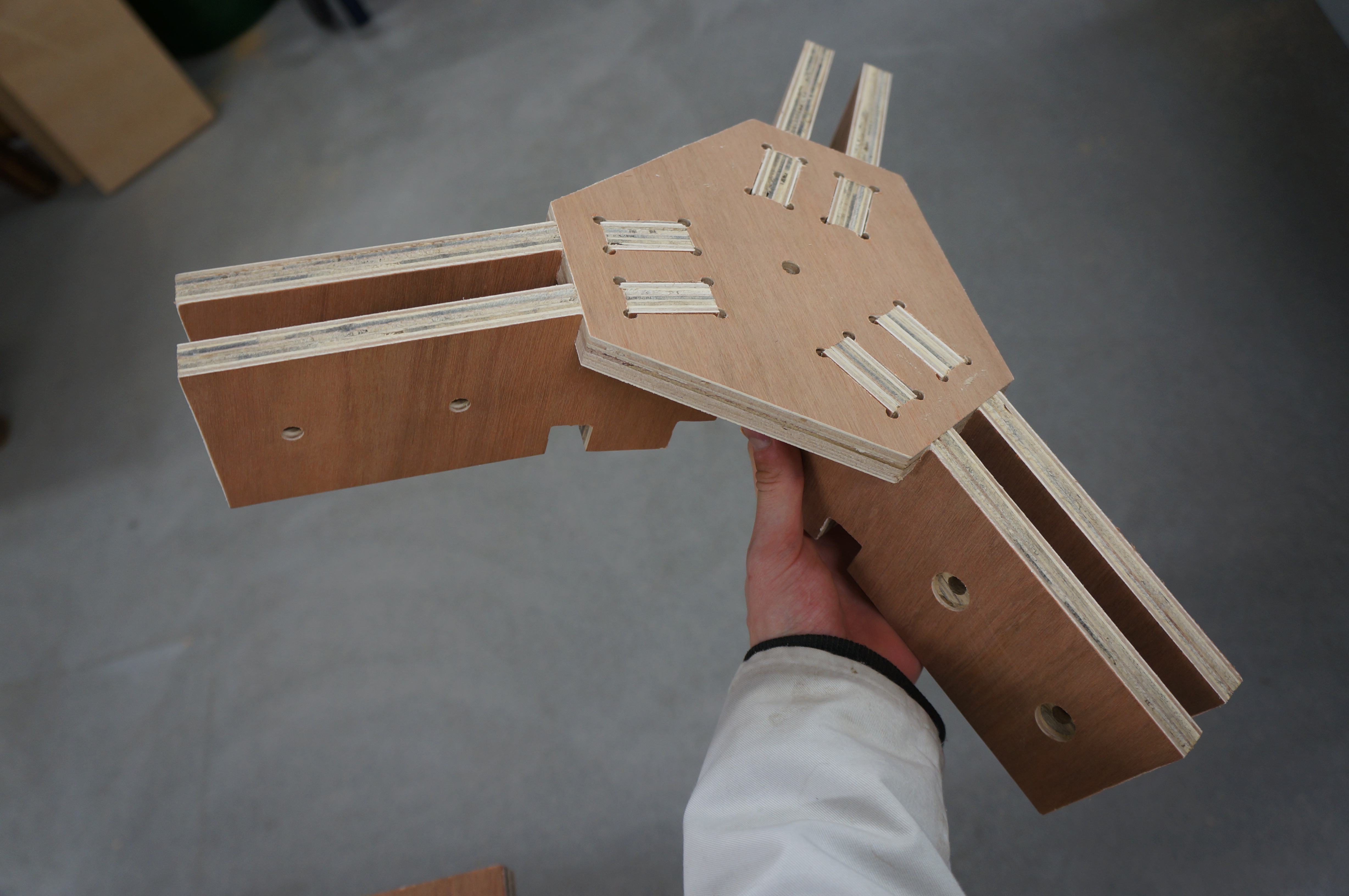 To test the strength of each joint for their revised design the group decided to risk lorenas life lorena to the task. Luckily their design proved successful and despite a few oversights in fixing elements which can easily be rectified, the group can move on.
 After the experimental first test in concrete casting, it was nesissary for this group to solve the issues of casting their numbers into each block. For their second attempt they tried using laser cut rubber components with a much smaller block to prevent material waste and save on weight.Â
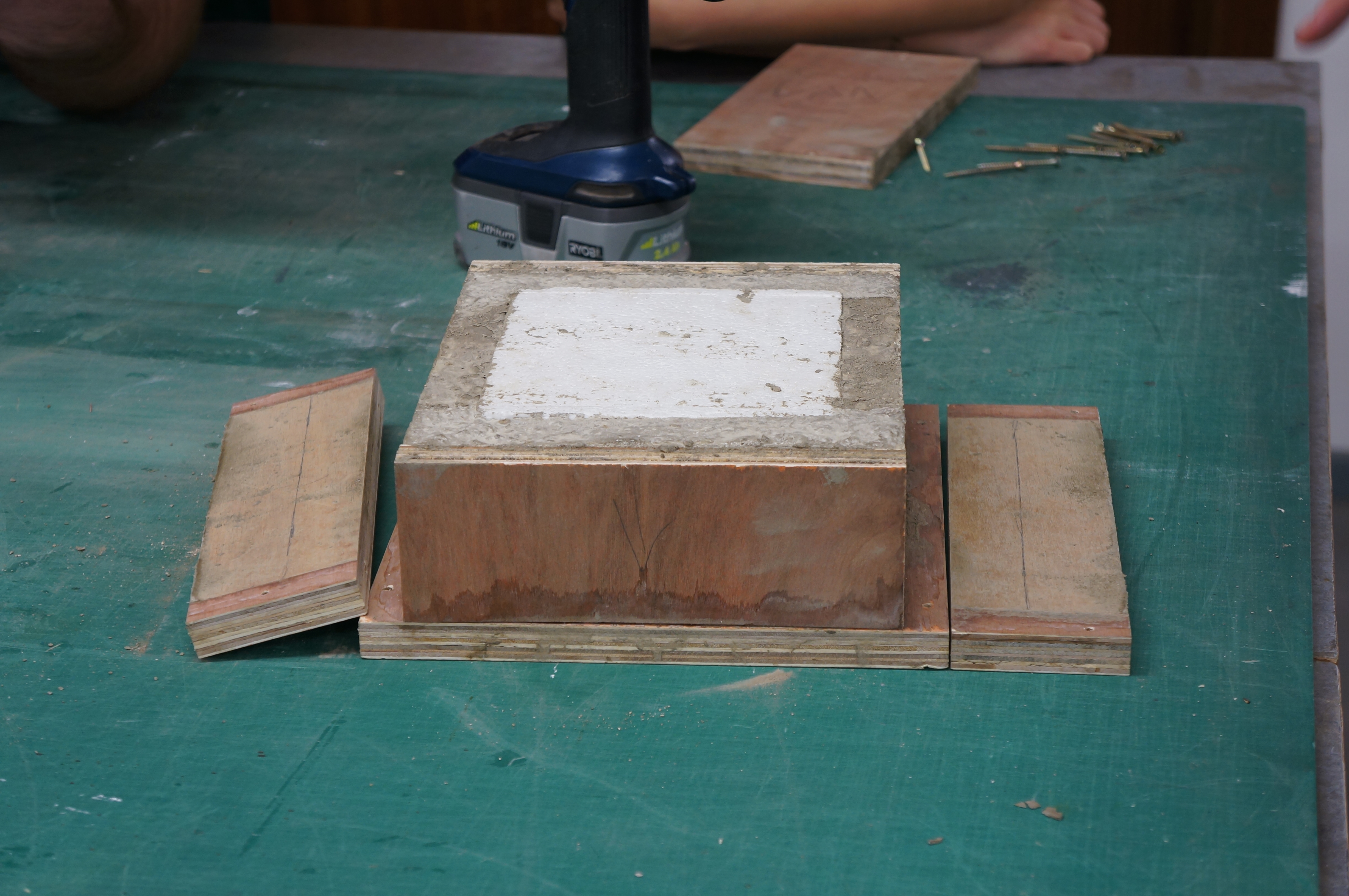
After the experimental first test in concrete casting, it was nesissary for this group to solve the issues of casting their numbers into each block. For their second attempt they tried using laser cut rubber components with a much smaller block to prevent material waste and save on weight. 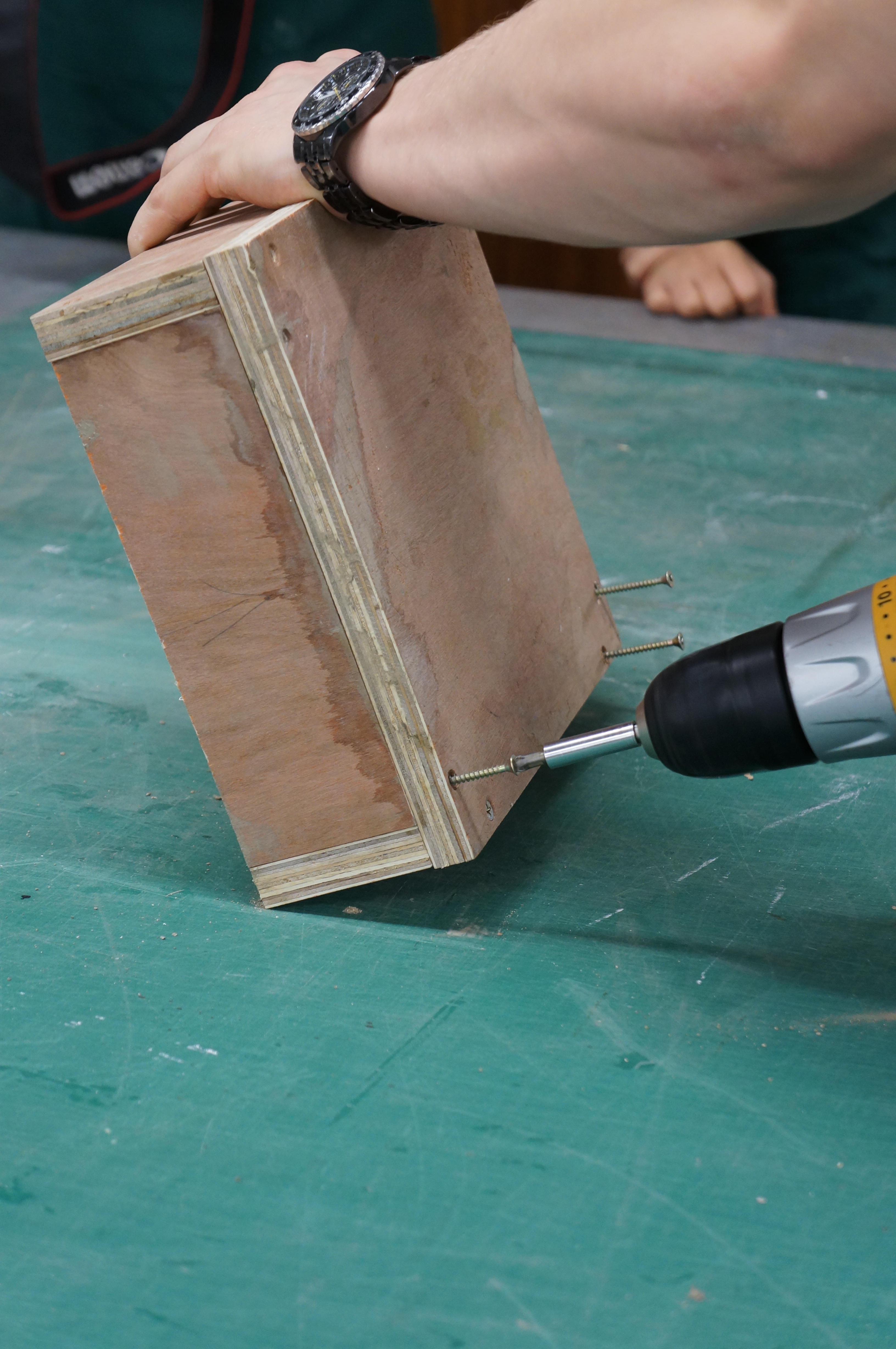 Any mould is always worth considering in depth as a badly designed one will cause you a world of problems when you come to remove your cast. This box was simple but constructed well to allow easy disassembly once the cast has cured.Â
Any mould is always worth considering in depth as a badly designed one will cause you a world of problems when you come to remove your cast. This box was simple but constructed well to allow easy disassembly once the cast has cured. 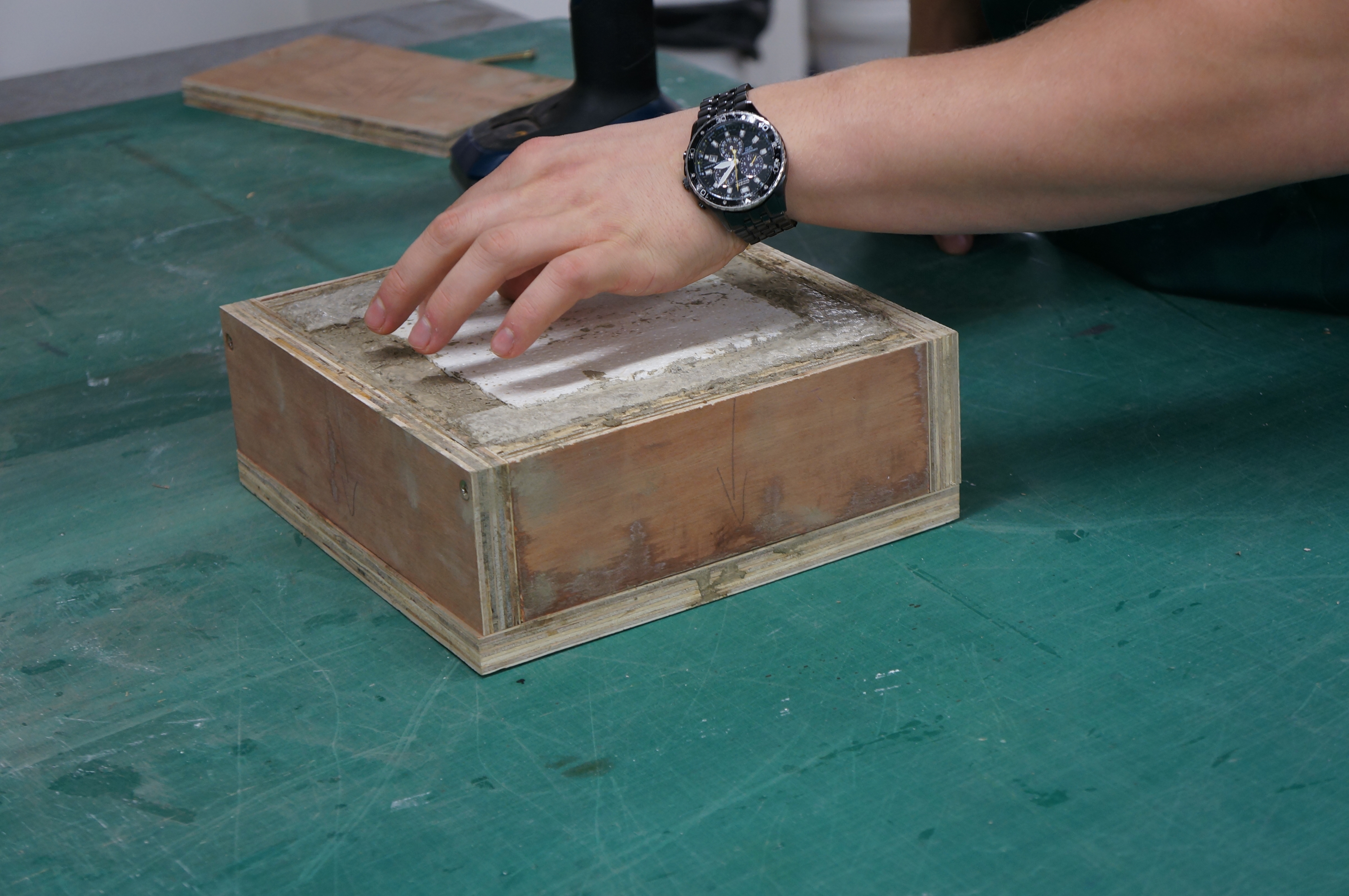
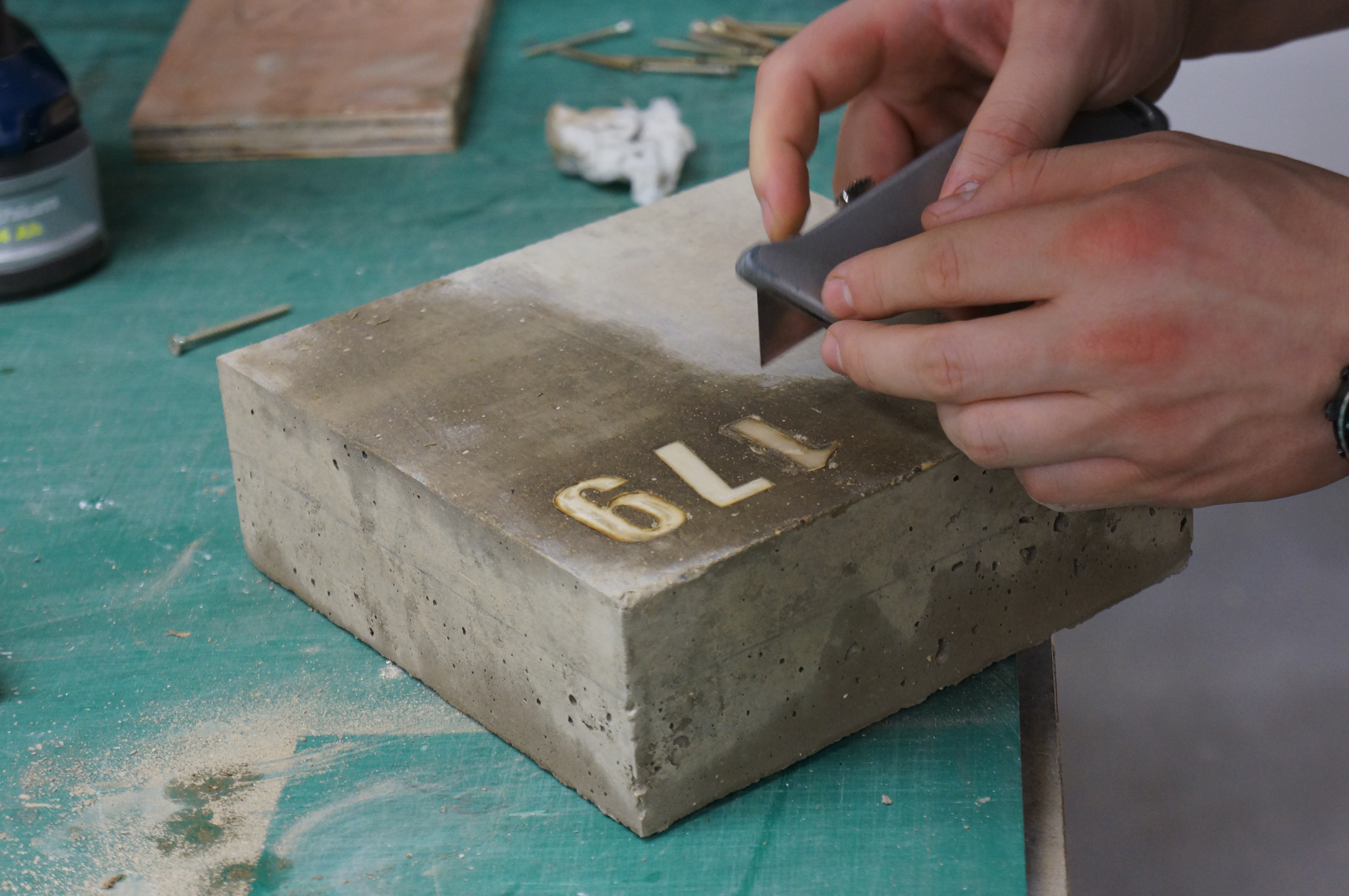
 The finished block turned out well with the flex in the rubber numbers allowing for the expansion of the concrete as it sets. Laser cutting this material can prove time consuming and the number required may need to be outsourced due to demand on our machines from all Architecture Students. It is always worth considering outsourcing elements that need to be mass produced as if you are involved in a ‘real world’ project. Costs can often be lower and experienced companies will be able to offer you more specific advice on what you are trying to achieve at 1:1. We’ll be posting more on these project in the near future!Â
The finished block turned out well with the flex in the rubber numbers allowing for the expansion of the concrete as it sets. Laser cutting this material can prove time consuming and the number required may need to be outsourced due to demand on our machines from all Architecture Students. It is always worth considering outsourcing elements that need to be mass produced as if you are involved in a ‘real world’ project. Costs can often be lower and experienced companies will be able to offer you more specific advice on what you are trying to achieve at 1:1. We’ll be posting more on these project in the near future!